

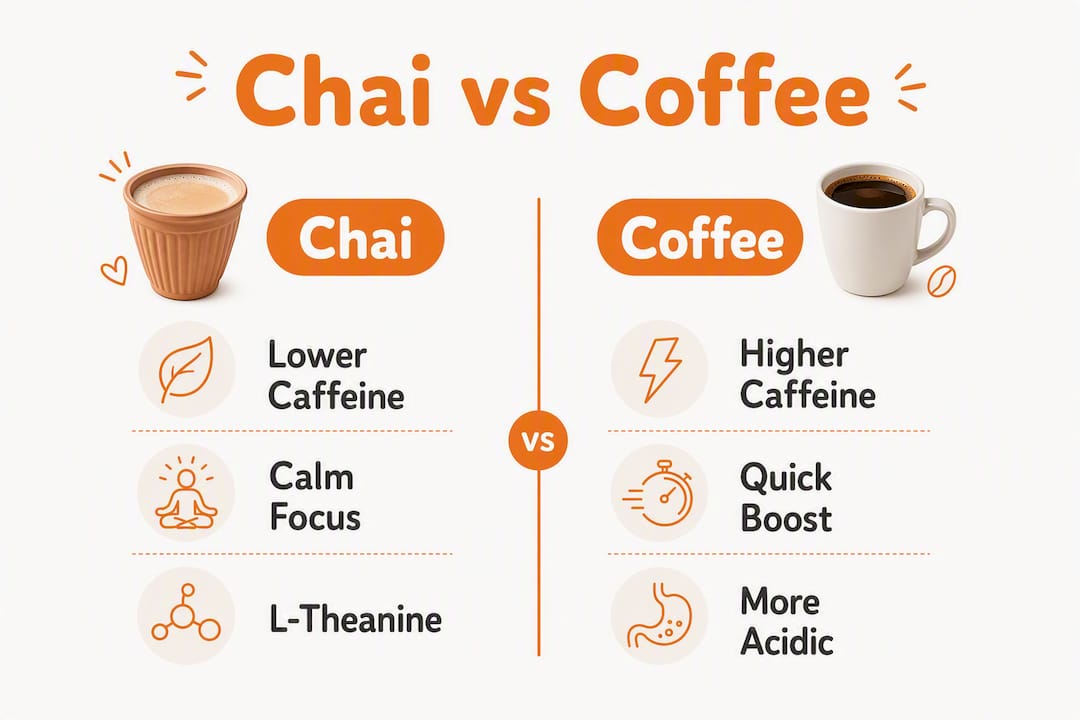
Coffee has notably more caffeine than chai. A standard 8-oz cup of brewed coffee delivers a significantly higher caffeine content than the same size cup of homemade masala chai. If you need a fast, strong boost before a workout or an early-morning deadline, coffee wins on raw caffeine. If you want calm, steady focus without the jitters or a restless night, chai is the smarter pick.
Quick numbers: Chai generally has less caffeine per 8 oz than coffee, though exact amounts vary.
The comparison gets more interesting once you factor in preparation style, spice chemistry, and how your body actually absorbs caffeine from each drink. The table in the comparison section below breaks it all down by serving type.
Table of Contents
- What exactly is “chai,” and why does it matter for caffeine?
- What counts as “coffee” in this comparison?
- How does chai caffeine compare to coffee, serving by serving?
- Why do the numbers vary so much across brands and preparations?
- How chai and coffee actually feel different in your body
- When should you choose chai vs. coffee?
- Dirty chai, chai lattes, and premix products: the exceptions that change everything
- How the caffeine ranges here were estimated
- Key Takeaways
- The case for knowing your caffeine source
- Consistent chai energy, without the guesswork
- Authoritative sources and further reading
What exactly is “chai,” and why does it matter for caffeine?
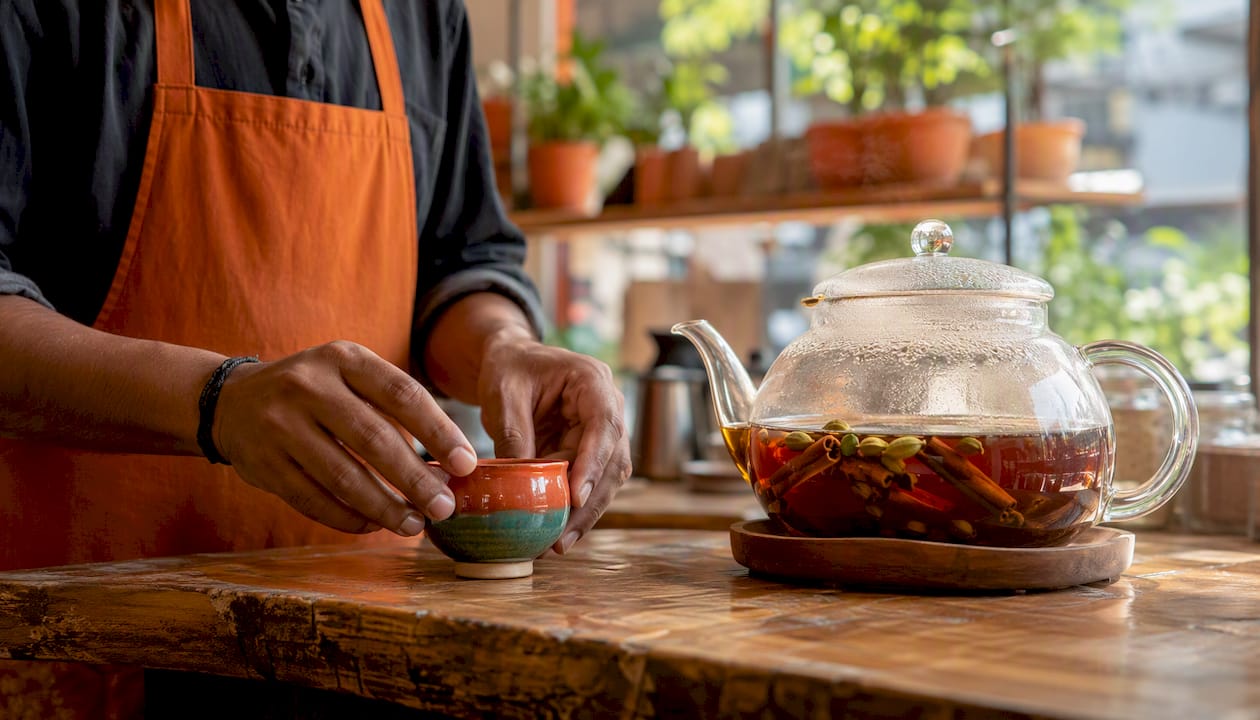
“Chai” literally means tea in Hindi, but in the American context it almost always refers to masala chai: black tea brewed with warming spices like ginger, cardamom, cinnamon, and cloves, usually finished with milk and a touch of sweetener. The black tea is the caffeine source. The spices contribute flavor and functional benefits, but they do not add caffeine.
The format you choose changes the caffeine picture significantly:
- Home-brewed masala chai: Black tea steeped in water and milk with whole or ground spices. Caffeine depends on the tea variety, steep time, and how much milk dilutes the brew.
- Chai latte (café-style): Steamed milk poured over a chai concentrate. The concentrate is where caffeine hides. A weak concentrate in a large cup can mean less caffeine than you expect; a strong one in a 16-oz cup can rival drip coffee.
- Instant or premix chai: Pre-blended powder or granules containing tea extract, spices, and often milk powder. Caffeine per serving is more consistent and usually labeled, making these the easiest format to track.
- Decaf or herbal chai blends: Rooibos-based or herbal chai contains no caffeine at all. These are not the same as black-tea chai, even though they share the name.
The key variables that raise or lower caffeine in chai are the type of black tea used (Assam tends to run higher than Darjeeling), how long the tea steeps, water temperature, and how much milk dilutes the final cup. A short steep in a milky brew can land below 20 mg; a long steep with a strong Assam base can push past 60 mg.
What counts as “coffee” in this comparison?
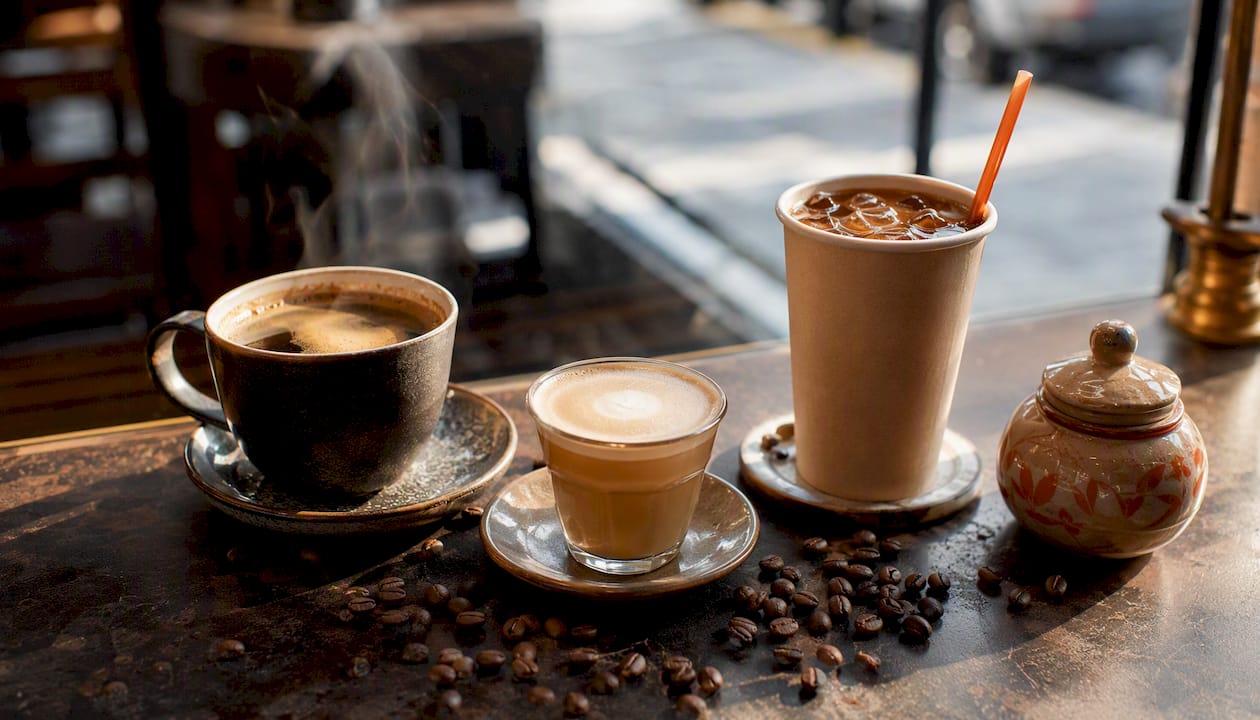
For the purposes of this article, the caffeine baseline for coffee is an 8-oz cup of brewed drip or filtered coffee, which is how most Americans make coffee at home. That is the fairest apples-to-apples comparison with an 8-oz chai.
Espresso and cold brew are concentrated formats that change the math. A single 1-oz espresso shot contains approximately 63 mg of caffeine, which sounds lower than drip coffee until you remember that most café drinks use a double shot. Cold brew, often served in 16-oz portions, can deliver significantly more caffeine per serving than standard drip because of its long extraction time and high coffee-to-water ratio.
Bean species and roast level also shift caffeine per cup. Robusta beans carry roughly twice the caffeine of Arabica. Lighter roasts, counterintuitively, tend to retain slightly more caffeine by weight than dark roasts because extended heat degrades caffeine. Grind size and brew time matter too: a finer grind and longer extraction pull more caffeine from the same amount of grounds.
How does chai caffeine compare to coffee, serving by serving?
The table below uses an 8-oz serving as the standard baseline. Espresso is listed per 1-oz shot. Cold brew reflects a common 16-oz café serving. All figures are typical ranges; actual caffeine will vary by brand, recipe, and preparation.
| Preparation | Serving size | Typical caffeine (mg) |
|---|---|---|
| Home-brewed masala chai | 8 oz | moderate caffeine |
| Chai latte (café concentrate) | 8 oz | higher caffeine within chai range |
| Instant / premix chai | 8 oz | variable caffeine |
| Brewed drip coffee | 8 oz | higher caffeine |
| Espresso (single shot) | 1 oz | benchmark caffeine for espresso |
| Cold brew | 16 oz | higher caffeine due to serving size |
| Dirty chai (chai + single espresso) | 12 oz | combined caffeine from chai and espresso |
A few things stand out. First, home-brewed masala chai sits well below drip coffee in almost every scenario. Second, café-style chai concentrates and large-format lattes can push caffeine closer to coffee levels depending on concentrate strength and cup size. Third, dirty chai (chai with an added espresso shot) crosses into coffee territory entirely.
The practical takeaway: if you order a 16-oz chai latte at a chain café, you may be getting more caffeine than you assumed. Always ask whether the shop uses a concentrate or brewed tea as the base.
Why do the numbers vary so much across brands and preparations?
A single mg figure for “chai” or “coffee” is always an approximation. Several variables push the actual number up or down:
- Tea leaf type and oxidation: Fully oxidized black teas (Assam, Ceylon) release more caffeine than lightly oxidized oolongs. Most masala chai uses Assam or a CTC (crush-tear-curl) black tea, which runs on the higher end.
- Steep time and water temperature: Longer steep times and hotter water extract more caffeine from tea leaves. A 3-minute steep at 200°F pulls noticeably more caffeine than a 1-minute steep at 175°F.
- Concentrate vs. brewed: Chai concentrates are pre-extracted at high strength, so caffeine per ounce is much higher than home-brewed tea. Dilution ratio determines the final cup caffeine.
- Milk dilution: Adding milk to chai reduces caffeine per fluid ounce but does not change the total mg in the cup. A milkier chai feels lighter but delivers the same caffeine as the same brew without milk.
- Coffee bean species: Robusta beans carry roughly twice the caffeine of Arabica. Blends vary widely.
- Grind size and extraction time: Drip coffee typically delivers 80–100 mg per 8 oz, while espresso delivers ~63 mg per 1-oz shot because extraction time and pressure differ.
- Shop recipes and cup sizes: A 20-oz chain-café chai latte with a strong concentrate can contain more caffeine than a standard 8-oz drip coffee.
Pro Tip: When buying packaged chai premix, check the ingredient list for “black tea extract” or “tea solids” and look for a caffeine-per-serving disclosure. For coffee-shop chai lattes, ask whether the base is brewed tea or a concentrate. That one question tells you whether you are in the 40 mg range or the 80 mg range.
How chai and coffee actually feel different in your body
The caffeine numbers only tell part of the story. Two drinks with similar mg can feel completely different, and chai vs. coffee is a clear example of that.
Coffee delivers caffeine quickly. Most people feel the onset within 15–30 minutes, with a peak around 45–60 minutes. The rapid spike is partly why coffee can trigger jitters, a racing heart, or anxiety in caffeine-sensitive people.
Chai works differently. L-theanine in black tea modulates alpha-wave activity in the brain and slows peak caffeine uptake, producing a calmer, more focused state rather than a sharp spike. Tannins in black tea also slow caffeine absorption by binding some compounds during digestion, which is why the same mg of caffeine from tea and coffee can feel subjectively different.
| Effect dimension | Chai (8 oz, 30–50 mg) | Brewed coffee (8 oz, 95–120 mg) |
|---|---|---|
| Onset | typical caffeine onset time for chai | typical caffeine onset time for brewed coffee |
| Peak effect | typical peak effect time range for chai | typical peak effect time range for brewed coffee |
| Duration | typical effect duration range for chai | typical effect duration range for brewed coffee |
| Jitter / anxiety risk | generally lower due to L-theanine buffer | higher risk at full caffeine dose |
| Acidity / reflux risk | lower to moderate, often gentler due to spices | moderate to higher risk |
| Digestive comfort | often gentler due to spices like ginger and cardamom | can irritate sensitive stomachs |
Acidity is a real differentiator. Coffee is naturally acidic and can aggravate acid reflux or gastric irritation, particularly on an empty stomach. Spices in masala chai, especially ginger and cardamom, have digestive and mild anti-inflammatory properties that can make chai a more stomach-friendly option. If you have been reaching for antacids after your morning coffee, that is a signal worth paying attention to.
When should you choose chai vs. coffee?
The choice usually comes down to three factors: how much caffeine you need, when you are drinking it, and how your body responds.
Choose coffee when you need a fast, strong boost. Pre-workout, early-morning tight deadlines, or any situation where you want maximum alertness quickly, coffee’s higher caffeine and faster onset are the right tool. Nutrition experts recommend coffee for rapid, high-intensity boosts precisely because the caffeine spike is sharper and more immediate.
Choose chai when you want sustained, calm focus without the crash. Creative work, long study sessions, or an afternoon pick-me-up all suit chai’s slower, smoother energy curve. Chai is also the recommended choice for people who experience coffee-induced jitters or acid reflux, since the lower caffeine load and spice profile are gentler on both the nervous system and the gut.
A practical daily strategy that works for many people: coffee in the morning when you need to hit the ground running, then switch to chai after noon. The Mayo Clinic notes that caffeine can stay in your system for hours, so a late-afternoon coffee can push sleep onset back even when you do not feel wired. Chai’s lower caffeine load makes it a far safer afternoon drink for most people.
Dirty chai, chai lattes, and premix products: the exceptions that change everything
Dirty chai is the most important exception to the standard chai vs. coffee comparison. A dirty chai is simply a chai latte with one or more espresso shots added. A single espresso shot adds approximately 63 mg of caffeine to whatever the chai base contains, which means a dirty chai with a double shot can easily exceed 150 mg total, more than a standard drip coffee.
Chain-café chai lattes are another category to watch. Because they use proprietary concentrates, caffeine per serving varies widely:
- A 12-oz chain chai latte made with a strong concentrate can contain 70–95 mg of caffeine.
- A 20-oz version of the same drink can push past 120 mg, matching or exceeding drip coffee.
- Some branded concentrates sold in grocery stores list caffeine per serving; many do not.
For packaged chai premixes, look for these label signals:
- “Black tea extract” or “tea solids” as a primary ingredient: higher caffeine, usually 40–60 mg per serving.
- “Instant tea” or “tea powder”: caffeine varies; check the nutrition panel if listed.
- “Rooibos” or “herbal blend”: caffeine-free regardless of spice content.
- Caffeine-per-serving disclosure: the most reliable signal; not all brands include it, but it is worth seeking out.
How the caffeine ranges here were estimated
The mg ranges in this article are drawn from a combination of authoritative sources and standard serving-size assumptions. No single number is exact; ranges reflect real-world variation across brands, preparation methods, and home recipes.
Primary sources used:
- Mayo Clinic caffeine guidance: tabulated per-drink caffeine estimates and the widely cited safe upper limit of up to 400 mg per day for healthy adults.
- Health.com chai vs. coffee analysis: L-theanine and tannin effects, espresso shot caffeine (~63 mg), and brewing variable guidance.
- Verywell Health chai vs. coffee guidance: tolerance and effect-based recommendations, spice digestive benefits.
- Food Insight caffeine in tea: tea-type caffeine ranges and brewing variable context.
Serving-size assumptions: 8 oz for all brewed beverages (chai and drip coffee), 1 oz for espresso, 16 oz for cold brew. Ranges are reported rather than single figures because preparation variables make a single number misleading. Conservative rounding is used throughout; figures are rounded to the nearest 5 mg.
This article provides general nutritional information, not medical advice. Consult a healthcare professional or registered dietitian for guidance specific to your health situation, particularly if you are pregnant, have a heart condition, or take medications that interact with caffeine.
Key Takeaways
Coffee contains roughly two to three times more caffeine than home-brewed chai per 8-oz serving, but preparation method, spice chemistry, and serving size can close that gap significantly.
| Point | Details |
|---|---|
| Coffee has more caffeine | Brewed coffee delivers 95–120 mg per 8 oz; home-brewed masala chai delivers 30–50 mg per 8 oz. |
| Preparation changes everything | Café concentrates, dirty chai, and large servings can push chai caffeine to coffee levels. |
| Chai feels smoother | L-theanine and tannins in black tea slow caffeine absorption, reducing jitters and crash risk. |
| Choose by goal and timing | Coffee for fast, strong boosts; chai for calm focus, afternoon use, or sensitive stomachs. |
| Dropoutchaiwala premix | Dropoutchaiwala’s labeled premix packs (masala, ginger, cardamom) offer consistent, predictable caffeine per serving. |
The case for knowing your caffeine source
Most people pick their morning drink by habit, not by what the caffeine actually does to them. That is worth reconsidering.
The conventional wisdom is that coffee is simply “stronger” and chai is the gentle alternative. That framing is mostly true, but it misses the more interesting point: the quality of the energy matters as much as the quantity. Chai’s L-theanine and tannin combination produces a biochemically distinct effect from coffee’s rapid caffeine spike, and for a large portion of people, that distinction is more relevant to their daily performance than the raw mg difference.
There is also a practical blind spot in how people order chai. Many assume a café chai latte is automatically the low-caffeine option. It often is not. A large concentrate-based chai latte can match a standard drip coffee, and a dirty chai with a double shot can exceed it. The label “chai” does not guarantee a gentle caffeine experience.
The smarter approach is to treat caffeine as a tool with a dose and a timing. Coffee in the morning when you need the spike. Chai in the afternoon when you want focus without disrupting sleep. And when you want the chai experience with a known, consistent caffeine level, a quality premix with a labeled caffeine disclosure is more reliable than guessing at a café’s concentrate strength.
Consistent chai energy, without the guesswork
If you have been switching between coffee and chai trying to find the right energy balance, the missing piece is usually consistency. Café concentrates vary. Home brews vary. But a well-formulated premix gives you the same caffeine profile every single time.

Dropoutchaiwala offers a range of authentic Indian chai premix packs, including masala, ginger, and cardamom varieties, each blended with traditional spices known for digestive and wellness benefits. The ginger and cardamom blends are particularly well-suited for anyone who wants the calming energy of chai without the acidity or stomach irritation that coffee can bring. Every pack is made for convenience: no steeping guesswork, no concentrate ratios to figure out. Just consistent, spiced chai with a predictable caffeine level.
This article is published by Dropoutchaiwala. Browse the full chai premix range to find the flavor that fits your energy goals, and order online or pick up at a retail location near you.
Authoritative sources and further reading
- Mayo Clinic: Caffeine content for coffee, tea, soda and more — Tabulated caffeine estimates by drink type and the 400 mg/day safe upper limit guidance for healthy adults.
- Health.com: Chai vs. Coffee for Energy and Caffeine — Analysis of L-theanine, tannins, espresso shot caffeine, and brewing variables affecting chai caffeine.
- Verywell Health: Chai vs. Coffee Guidance — Tolerance-based recommendations and spice digestive benefit context.
- Food Insight: Caffeine Amounts in Different Types of Tea — Tea-type caffeine ranges and brewing variable context for black, green, and herbal teas.
- FDA: Spilling the Beans — How Much Caffeine Is Too Much? — Federal guidance on caffeine safety thresholds and risk factors.
- PubMed: L-theanine and caffeine interaction study — Peer-reviewed research on how L-theanine modifies caffeine’s cognitive and physiological effects.
- Dropoutchaiwala: Chai Premix Collection — Product range for readers seeking consistent, spiced chai with predictable caffeine per serving.
