

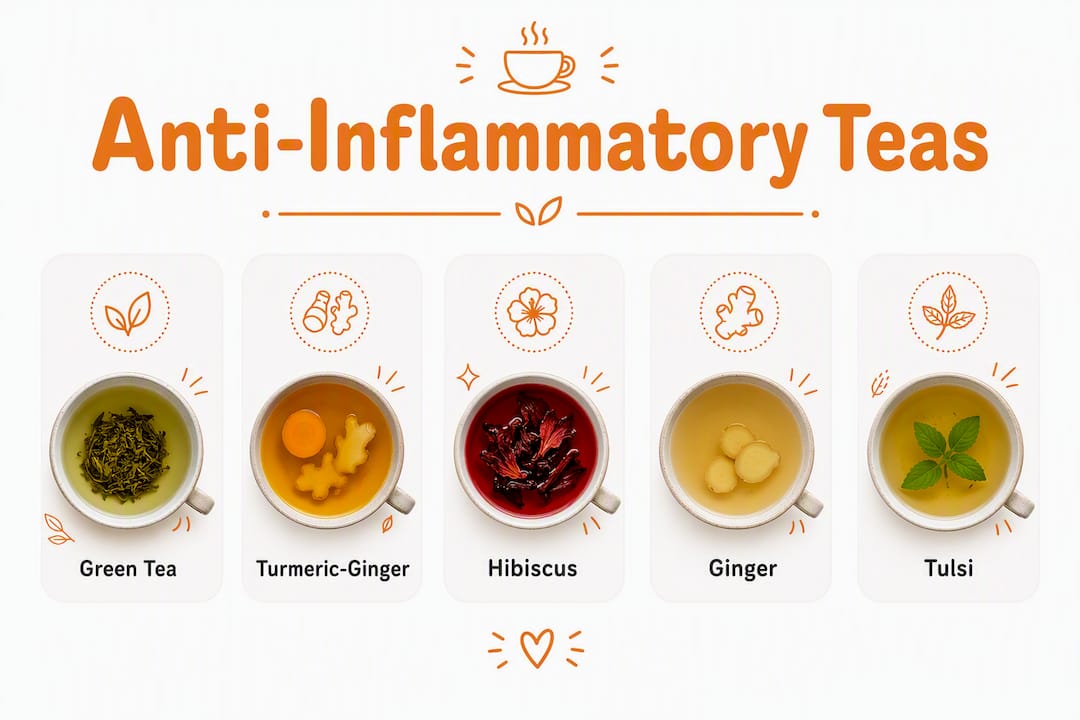
The three strongest anti-inflammatory teas, based on repeated human trial data, are green tea (EGCG), turmeric-ginger (curcumin + gingerols, boosted by piperine), and hibiscus (anthocyanins). Each has measurable effects on markers like C-reactive protein (CRP) and systolic blood pressure in clinical settings. Your quickest next step: build a simple 2–3 tea rotation and stick with it for 6–12 weeks, tracking how you feel week by week. If you take blood thinners or any prescription medication, loop in your clinician before starting.
- Green tea: EGCG inhibits NF-kappa-B, the master switch for inflammatory gene expression, with consistent CRP reductions documented across multiple meta-analyses.
- Turmeric-ginger: Curcumin (turmeric) and gingerols (ginger) both suppress COX-2 pathways. Curcumin needs piperine (black pepper) or fat to absorb properly — without it, most of the compound passes through unused.
- Hibiscus: Meta-analyses report systolic blood pressure reductions near 7 mmHg with daily intake, driven by its dense anthocyanin content.
Start with one cup of each across your day. That’s the whole protocol in its simplest form.
Table of Contents
- 1. Green tea is the most evidence-backed anti-inflammatory tea you can drink
- 2. Turmeric-ginger tea targets CRP through two pathways at once
- 3. Hibiscus tea is the strongest option for blood pressure and cardiovascular inflammation
- 4. Ginger tea works across multiple inflammatory pathways and is easy to use daily
- 5. Tulsi (holy basil) modulates stress-driven inflammation through adaptogenic action
- 6. Rosehip tea delivers vitamin C and anthocyanins for joint-focused inflammation
- 7. Oolong tea sits between green and black tea in both oxidation and evidence
- 8. White tea is the least processed option with a gentle polyphenol profile
- 9. Chamomile tea supports inflammation through apigenin and mild COX-2 inhibition
- 10. Peppermint tea reduces GI inflammation and has mild systemic effects
- 11. Fennel tea rounds out a rotation with digestive and mild estrogenic anti-inflammatory effects
- How these teas reduce inflammation at the biological level
- How to brew, dose, and rotate anti-inflammatory teas for real results
- Safety, side effects, and drug interactions you should know about
- Which tea fits your goal? A practical decision guide
- Key Takeaways
- Why routine beats perfection when it comes to anti-inflammatory tea
- Dropout Chaiwala’s spiced chai blends make the daily rotation easier to keep
- Useful sources and further reading
1. Green tea is the most evidence-backed anti-inflammatory tea you can drink
Green tea’s active compound, epigallocatechin gallate (EGCG), is the most studied anti-inflammatory polyphenol in any tea. It works primarily by inhibiting NF-kappa-B, the transcription factor that activates genes for pro-inflammatory cytokines like TNF-α and interleukin-6. Multiple meta-analyses link habitual green tea consumption to lower CRP levels and reduced cardiovascular inflammation markers.
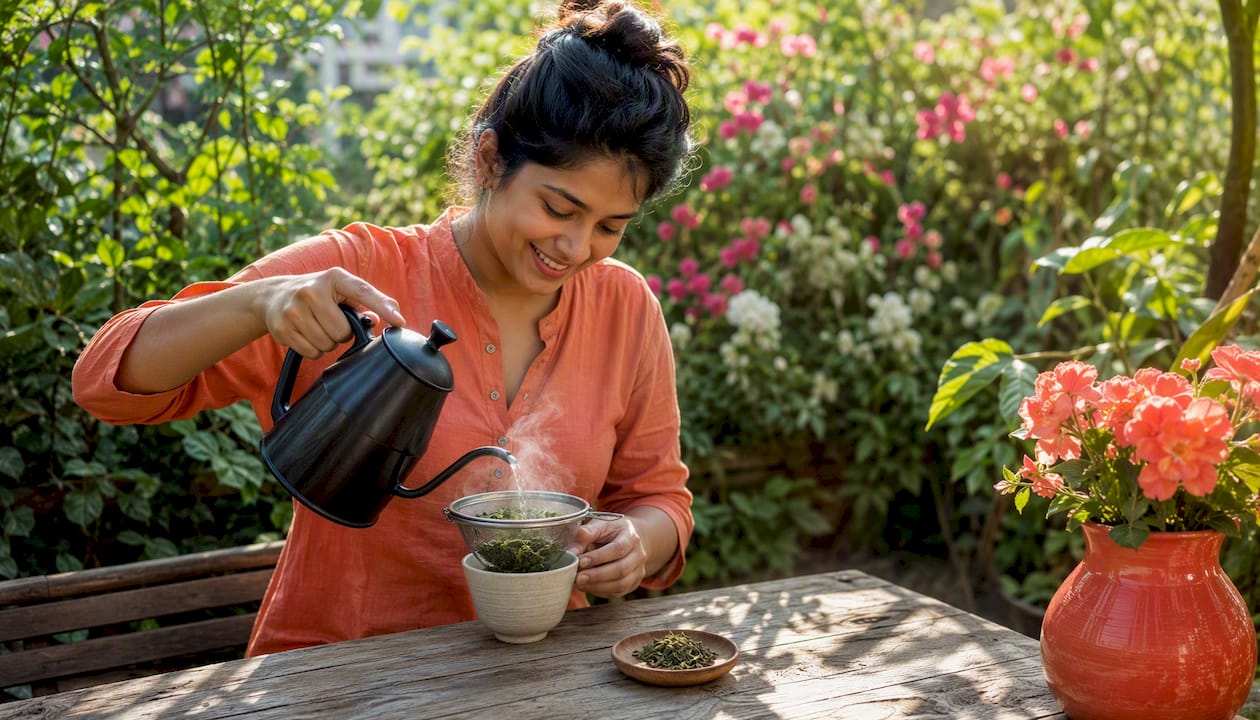
Practically, two to three cups daily is the range most trials used. Steep at 160–180°F for two to three minutes — boiling water degrades EGCG and turns the flavor bitter. A squeeze of lemon slows oxidation and keeps catechins stable in your gut.
2. Turmeric-ginger tea targets CRP through two pathways at once
Turmeric and ginger are the power couple of herbal teas for inflammation. Curcumin (turmeric’s primary polyphenol) and gingerols (ginger’s phenolic compounds) both inhibit COX-2 and NF-kappa-B, but through slightly different molecular routes. That dual action is why combining them in one cup is smarter than drinking either alone.

The catch with turmeric: curcumin has notoriously poor bioavailability on its own. Pharmacokinetic reviews confirm that adding piperine (the active compound in black pepper) markedly improves curcumin absorption. A small amount of fat — a splash of whole milk or coconut milk — helps further. Skip either of those, and most of the curcumin you drink passes through without reaching your bloodstream.
For a practical recipe: steep one teaspoon of fresh grated ginger and half a teaspoon of turmeric powder in hot water for five minutes, add a pinch of black pepper, and finish with a small pour of milk. That’s your golden infusion.
3. Hibiscus tea is the strongest option for blood pressure and cardiovascular inflammation
Hibiscus sabdariffa’s deep crimson color comes from anthocyanins, a class of flavonoids with potent antioxidant and anti-inflammatory activity. Clinical trials show hibiscus tea can lower systolic blood pressure in certain populations, making it one of the few herbal teas with a measurable cardiovascular outcome in human studies.
It’s tart, almost cranberry-like, which makes it one of the more palatable options on this list — especially iced. Steep dried hibiscus flowers in near-boiling water for five minutes. Two cups daily is the protocol most trials followed. If you’re on antihypertensive medications, talk to your doctor first, since the additive BP-lowering effect can be significant.
4. Ginger tea works across multiple inflammatory pathways and is easy to use daily
Ginger’s bioactive compounds — gingerols and shogaols — target multiple inflammatory pathways simultaneously and have clinical associations with reduced inflammatory symptoms and improved gastrointestinal outcomes. That GI benefit matters more than it sounds: chronic gut inflammation is a driver of systemic CRP elevation, so calming the gut often shows up in blood markers over time.
Fresh ginger is more potent than dried. Grate a thumb-sized piece into boiling water, steep for five to seven minutes, and strain. Dietitian guides consistently rank ginger tea highly for daily anti-inflammatory use because it’s accessible, affordable, and genuinely pleasant to drink — especially with a little honey and lemon.
5. Tulsi (holy basil) modulates stress-driven inflammation through adaptogenic action
Tulsi, or holy basil (Ocimum tenuiflorum), works differently from the teas above. Rather than directly suppressing COX-2 or NF-kappa-B, tulsi acts as an adaptogen, helping regulate cortisol. Chronically elevated cortisol is a well-documented driver of systemic inflammation, so tulsi’s cortisol-modulating effect has a real, if indirect, anti-inflammatory mechanism.
Human trial data for tulsi is more limited than for green tea or ginger, but preliminary RCTs show reductions in fasting blood glucose and stress biomarkers. It has a clove-like, slightly peppery flavor that pairs well with ginger. An evening cup fits naturally into a wind-down routine.
6. Rosehip tea delivers vitamin C and anthocyanins for joint-focused inflammation
Rosehip (Rosa canina) is one of the more underrated options for people dealing with joint pain specifically. It contains both anthocyanins and a high concentration of vitamin C, which supports collagen synthesis in joint tissue. Small clinical trials in osteoarthritis patients have shown reductions in pain scores and CRP after consistent rosehip supplementation.
The evidence base is thinner than green tea’s, but the joint-specific outcomes make it worth including in a rotation for anyone whose primary concern is knee or hip discomfort. It brews into a mild, slightly fruity tea that most people find easy to drink daily.
7. Oolong tea sits between green and black tea in both oxidation and evidence
Oolong is partially oxidized, which means it retains some EGCG from the green-tea end of the spectrum while also developing theaflavins (the polyphenols dominant in black tea). Both compound classes have anti-inflammatory activity, though oolong’s evidence base is thinner than green tea’s. What oolong offers is variety: a richer, more complex flavor that makes daily tea drinking feel less repetitive.
If you find green tea too grassy or astringent, oolong is a practical swap that keeps polyphenol intake up without sacrificing palatability.
8. White tea is the least processed option with a gentle polyphenol profile
White tea is harvested before the leaves fully open and undergoes minimal processing, preserving a high concentration of catechins in their original form. The evidence for white tea specifically is limited compared to green tea, but its catechin profile is similar, and some researchers argue its lower caffeine content makes it a better choice for afternoon or evening consumption.
Think of it as green tea’s quieter sibling: less studied, but mechanistically plausible and easy to drink.
9. Chamomile tea supports inflammation through apigenin and mild COX-2 inhibition
Chamomile contains apigenin, a flavonoid with mild COX-2 inhibitory activity and well-documented anxiolytic (anxiety-reducing) effects. The anti-inflammatory evidence in humans is modest, but chamomile’s real value in an anti-inflammatory routine is indirect: better sleep reduces cortisol, and lower cortisol means lower baseline inflammation.
One important note for allergy-prone readers: chamomile is in the Asteraceae family, which means people with ragweed or chrysanthemum allergies may react to it. If you’re a seasonal allergy sufferer, test with a small amount first.
10. Peppermint tea reduces GI inflammation and has mild systemic effects
Peppermint’s active compound, menthol, has antispasmodic and mild anti-inflammatory effects on the gastrointestinal tract. Clinical trials support peppermint oil for IBS symptom relief, and the tea form carries some of the same GI-calming properties, though at lower concentrations.
For systemic CRP reduction, peppermint is not your strongest tool. But for people whose inflammation manifests primarily as gut discomfort, bloating, or IBS-type symptoms, a cup after meals is a practical and pleasant addition to any rotation.
11. Fennel tea rounds out a rotation with digestive and mild estrogenic anti-inflammatory effects
Fennel (Foeniculum vulgare) contains anethole, a compound with demonstrated anti-inflammatory and antispasmodic properties in lab and animal studies. Human evidence is limited, but fennel tea is widely used for digestive inflammation and bloating, and its mild licorice flavor makes it a distinctive, enjoyable option.
One caution: fennel has mild estrogenic activity. People with hormone-sensitive conditions should consult their clinician before making it a daily habit.
How these teas reduce inflammation at the biological level
| Tea | Primary Active Compound(s) | Main Clinical Outcome | Evidence Level |
|---|---|---|---|
| Green tea | EGCG, catechins | CRP reduction, cytokine suppression | Meta-analyses, RCTs |
| Turmeric-ginger | Curcumin, gingerols | CRP reduction, COX-2 inhibition | RCTs (with piperine) |
| Hibiscus | Anthocyanins | Systolic BP reduction (~7 mmHg) | Meta-analyses |
| Ginger | Gingerols, shogaols | GI inflammation, pain markers | Clinical trials |
| Tulsi | Eugenol, adaptogens | Cortisol, stress biomarkers | Preliminary RCTs |
| Rosehip | Anthocyanins, vitamin C | Joint pain, CRP (OA patients) | Small RCTs |
| Oolong | EGCG, theaflavins | Cardiovascular markers | Limited human data |
| Chamomile | Apigenin | Sleep/cortisol, mild COX-2 | Preliminary |
| Peppermint | Menthol | GI inflammation, IBS symptoms | Clinical trials (GI) |
The core mechanisms fall into four categories. First, NF-kappa-B inhibition: EGCG (green tea) and curcumin (turmeric) both suppress this master inflammatory transcription factor, which controls the production of TNF-α, interleukin-1β, and interleukin-6. Second, COX-2 inhibition: gingerols and curcumin block cyclooxygenase-2, the same enzyme targeted by NSAIDs like ibuprofen, though at lower potency. Third, anthocyanin antioxidant action: hibiscus and rosehip anthocyanins neutralize reactive oxygen species that would otherwise trigger inflammatory cascades. Fourth, adaptogenic cortisol modulation: tulsi reduces the cortisol-driven inflammation loop that chronic stress creates.
“Tea is a functional, complementary tool — clinical benefits appear over weeks; the biggest effect comes when tea is paired with anti-inflammatory diet and lifestyle changes.” — Harvard Health
WebMD’s clinical summary is worth quoting here for balance: while lab and animal data are strong across most of these teas, human trial evidence remains limited to a handful of RCTs with mixed results. Green and black tea extracts have shown CRP reductions in some studies, but the field is not yet at the level of pharmaceutical certainty. That’s not a reason to skip tea. It’s a reason to treat it as a consistent daily habit rather than a one-week experiment.
Subjective benefits — less bloating, better sleep, reduced joint stiffness — can appear within one to four weeks. Lab markers like CRP typically require 6–12 weeks of daily intake before showing measurable change.
How to brew, dose, and rotate anti-inflammatory teas for real results
Getting the most from these teas comes down to three things: correct preparation, absorption-boosting combinations, and consistency over weeks.
Brewing basics by tea type:
- Green and white tea: 160–180°F water, two to three minutes steep. Boiling water destroys EGCG and creates bitterness.
- Turmeric-ginger: Near-boiling water (200°F), five minutes steep. Always add a pinch of black pepper and a splash of milk or coconut milk for curcumin absorption.
- Hibiscus: Near-boiling water, five minutes steep. Strain well. Serve hot or iced.
- Ginger (fresh): Grate a thumb-sized piece, steep in boiling water for five to seven minutes. Fresh ginger delivers more gingerols than dried powder.
- Chamomile, tulsi, peppermint, fennel: Boiling water, five to ten minutes covered steep. Covering the cup keeps volatile compounds from escaping.
A simple daily rotation:
- Morning: Green tea (two cups) with lemon
- Midday: Turmeric-ginger infusion with black pepper and a splash of milk
- Evening: Hibiscus or tulsi (one to two cups)
This three-window approach covers NF-kappa-B inhibition, COX-2 suppression, anthocyanin antioxidant action, and cortisol modulation across a single day. You don’t need to hit all four every day — consistency matters more than perfection.
Pro Tip: Add a pinch of cinnamon to your turmeric-ginger blend. Cinnamon contains cinnamaldehyde, which has its own mild NF-kappa-B inhibitory activity, and it makes the flavor noticeably warmer and more drinkable — which means you’ll actually keep doing it.
Rotating between two or three tea categories gives broader biological coverage than relying on a single tea. Green tea handles cytokine suppression; turmeric-ginger targets COX-2; hibiscus addresses cardiovascular markers. Together, they cover more ground than any one of them alone.
Expect subjective changes — energy, digestion, joint comfort — within one to four weeks. For measurable CRP or blood pressure shifts, plan for six to twelve weeks of consistent daily intake before drawing conclusions.
Safety, side effects, and drug interactions you should know about
Anti-inflammatory teas are generally safe for healthy adults, but a few interactions and cautions deserve your attention before you start a daily protocol.
Key interactions and cautions:
- Blood thinners (warfarin, aspirin): Green tea, ginger, and turmeric all have mild antiplatelet or anticoagulant properties. At high daily doses, they can potentiate warfarin’s effect and increase bleeding risk. If you take any blood-thinning medication, discuss your tea intake with your clinician.
- Pregnancy: High-dose ginger (above the amounts in a normal cup of tea) and concentrated turmeric extracts are not recommended during pregnancy. Moderate tea consumption is generally considered low-risk, but confirm with your OB-GYN.
- Iron absorption: Green tea’s tannins bind non-heme iron and reduce its absorption. If you’re managing iron-deficiency anemia, drink green tea between meals rather than with iron-rich foods or supplements.
- High-dose extracts vs. tea: Hepatotoxicity cases linked to green tea are almost exclusively associated with concentrated EGCG supplements, not brewed tea. Stick to brewed tea rather than high-dose extract capsules unless a clinician supervises.
- Chamomile cross-reactivity: Chamomile belongs to the Asteraceae family. People with ragweed, chrysanthemum, or daisy allergies may experience allergic reactions. Start with a small amount.
- Fennel and hormonal conditions: Fennel’s mild estrogenic activity makes it a caution for people with hormone-sensitive cancers or conditions.
- Supplement quality: Adulterated or mislabeled herbal supplements are a documented problem in the U.S. market. When buying loose-leaf or bagged teas, look for products with third-party testing certifications (NSF International, USP) where available.
Pro Tip: If you’re scheduled for surgery, stop high-dose ginger and turmeric intake at least two weeks beforehand. Both compounds have antiplatelet effects that can complicate bleeding management during procedures.
Stop your tea protocol and contact your clinician if you notice unusual bruising, unexpected bleeding, significant digestive distress, or any new symptom that coincides with starting a new herbal tea — especially if you take prescription medications.
Which tea fits your goal? A practical decision guide
Not every tea serves every goal equally well. Here’s how to match your primary concern to the right category.
| Goal | Best Tea Category | Evidence Strength | Best Timing | Palatability |
|---|---|---|---|---|
| Lower CRP (systemic inflammation) | Green tea + turmeric-ginger | Strong (meta-analyses, RCTs) | Morning + midday | Moderate (needs flavor additions) |
| Lower blood pressure | Hibiscus | Strong (meta-analyses) | Morning or afternoon | High (tart, refreshing) |
| Joint pain relief | Ginger + rosehip | Moderate (small RCTs) | Midday or post-exercise | High (both are pleasant) |
| Stress/cortisol-driven inflammation | Tulsi + chamomile | Preliminary | Evening | High (mild, floral) |
| GI inflammation / bloating | Peppermint + fennel | Moderate (GI-specific trials) | After meals | High (both are aromatic) |
| Broad daily coverage | Green + turmeric-ginger + hibiscus rotation | Strongest combined | Across the day | Moderate to high |
The honest truth about compliance: the best tea for inflammation is the one you’ll drink every single day for six to twelve weeks. A tea you find unpleasant will sit in your cabinet after week two. Palatability is not a soft consideration — it’s a clinical variable, because consistent daily intake is what research links to measurable benefits. If green tea tastes too grassy, try oolong. If straight turmeric is too earthy, build it into a spiced chai blend with ginger and cardamom. The goal is a habit, not a perfect formula.
Key Takeaways
Green tea, turmeric-ginger, and hibiscus have the strongest human-trial evidence for reducing CRP and blood pressure, but measurable lab changes typically require 6–12 weeks of consistent daily intake. Subjective benefits — such as less bloating, improved sleep, or reduced joint stiffness — may appear within one to four weeks, but blood markers like CRP or systolic blood pressure shift reliably only after 6–12 weeks of daily tea use. Maintain your rotation for at least this duration to capture lasting effects.
Why routine beats perfection when it comes to anti-inflammatory tea
Here’s what most evidence-backed tea articles won’t say plainly: the research doesn’t reward the person who drinks the most scientifically optimal tea once a week. It rewards the person who drinks two or three cups of something they genuinely enjoy, every single day, for months.
The studies linking green tea to CRP reductions weren’t run on people who drank it occasionally. They tracked habitual consumers. The hibiscus blood pressure data came from participants who drank it daily for weeks. Consistency is the active ingredient that most listicles forget to list.
That’s where spice-forward chai blends earn their place in an anti-inflammatory protocol. A blend that combines ginger, cardamom, and cinnamon in a premix you actually look forward to making is more valuable than a perfectly formulated tea you abandon by week three. Dropoutchaiwala’s ginger chai and masala chai premixes are built around exactly these spices — the kind of morning ritual that makes a six-week commitment feel less like a health project and more like a daily pleasure.
The science is clear on what works. The harder question is what you’ll actually keep doing. Build your rotation around flavor first, evidence second, and the habit will take care of itself.
Dropout Chaiwala’s spiced chai blends make the daily rotation easier to keep
Sticking to a 6–12 week anti-inflammatory tea protocol is straightforward in theory and harder in practice. Dropout Chaiwala’s chai premix collection gives you a genuinely convenient way to keep ginger and warming spices in your daily routine without measuring out individual ingredients every morning.

The ginger chai premix delivers gingerols in a ready-to-brew format that takes under two minutes. The masala blend layers ginger with cardamom and cinnamon, covering multiple anti-inflammatory compounds in a single cup. Both are spice-forward, aromatic, and built for daily drinking — which is exactly what compliance requires.
These blends work best as part of a broader rotation alongside green tea and hibiscus, not as a replacement for them. And as always: if you have a medical condition or take prescription medications, check with your clinician before making any herbal tea a daily habit. Browse the full range at Dropoutchaiwala and find the blend that fits your morning.
Useful sources and further reading
Meta-analyses and clinical trials:
- PMC: Polyphenols and inflammatory biomarkers
- PubMed: Green tea catechins and CRP meta-analysis
- PMC: Curcumin bioavailability and piperine
- PMC: Ginger bioactive compounds and clinical effects
- PMC: Hibiscus and cardiovascular outcomes
- PubMed: Anti-inflammatory effects of tea polyphenols
- PubMed: Herbal tea and inflammation markers
- PMC: Flavonoids and NF-kappa-B pathways
Trusted health guidance:
- NCCIH: Green tea health information
- Harvard Health: Benefits of herbal teas
- WebMD: Can tea help with inflammation?
- NCBI Bookshelf: Curcumin pharmacology
- PMC: Chamomile and apigenin review
