

The fastest way to enjoy a satisfying low sugar chai is to make a spiced concentrate ahead of time or keep a dry masala spice mix in a jar and sweeten it yourself with stevia, monk fruit, or allulose. Both options take less than 20 minutes to set up and give you full control over every gram of sweetness.
Your two quickest options:
- Make-ahead concentrate: Brew once, refrigerate for up to a week, mix with milk in minutes. Best for daily drinkers who want café-style depth without sugary syrups.
- Dry spice jar: Blend ground spices once, store for weeks, steep on demand. Best for someone who wants flexibility and speed without any prep commitment.
In a hurry? Grab a quality premix like Dropoutchaiwala’s masala or ginger chai pouch, skip the syrup, and sweeten with your own zero-calorie sweetener. Done in under five minutes.
Table of Contents
- How do you make a sugar-free chai concentrate at home?
- How to build a dry chai spice mix for instant low-sugar chai
- Which sweeteners work best in chai, and what are the swap ratios?
- What should you look for on store-bought chai labels?
- How do you order a lower-sugar chai at a café?
- What does low-sugar chai actually do for your blood sugar?
- How do you fix thin, bitter, or flat low-sugar chai?
- Key Takeaways
- Why the “just use less sugar” advice misses the point
- Dropoutchaiwala premix packs: consistent spice, your sweetness
- Cited sources and further reading
How do you make a sugar-free chai concentrate at home?
A well-made chai concentrate reproduces café-style depth without a drop of cane sugar. The secret is toasting whole spices first and using a strong black-tea backbone.
Ingredients (makes about 4 servings):
- 2 cups water
- 2 tablespoons loose-leaf strong black tea (or 3 tea bags)
- 6 green cardamom pods, lightly crushed
- 2 cinnamon sticks
- 4 whole cloves
- 1-inch fresh ginger, sliced thin
- ½ teaspoon black peppercorns
- Optional: 1 teaspoon unsulphured blackstrap molasses (adds syrup-like depth with minimal sugar)
Method:
- Toast cardamom, cloves, cinnamon, and peppercorns in a dry saucepan over medium heat for 60–90 seconds until fragrant.
- Add water and ginger. Bring to a gentle simmer.
- Add tea. Reduce heat and steep for 5 minutes. Do not boil aggressively or the tea turns bitter.
- Remove from heat. Steep an additional 3 minutes off the burner.
- Strain through a fine-mesh sieve into a glass jar.
- Cool completely before refrigerating.
Yield: Roughly 1.5 cups of concentrate. Mix 1 part concentrate with 1 part unsweetened milk for a latte, or 1:2 for a lighter cup.
Storage: Refrigerate for up to 7 days. For longer storage, freeze concentrate in ice-cube trays and blend the cubes with cold milk for a thick, non-diluted frappe with far better texture than pouring concentrate over ice.
Sugar callout: A typical café chai latte can contain a high amount of added sugar per serving. This homemade concentrate, sweetened with a small amount of stevia or monk fruit, brings that figure down to roughly 4–6 g per serving, most of which comes from the milk itself.
Pro Tip: Toast whole spices rather than using pre-ground. Whole spices release volatile aroma compounds that create a perception of sweetness through complexity, which means you genuinely need less sweetener to feel satisfied.
How to build a dry chai spice mix for instant low-sugar chai
A jarred spice blend is the most convenient path to a spiced chai without sugar on a busy morning. Mix it once, and you have weeks of flavor on demand.
Spice ratios (makes about 20 servings):
- 3 tablespoons ground cardamom
- 2 tablespoons ground cinnamon
- 1 tablespoon ground ginger
- 1 teaspoon ground cloves
- 1 teaspoon ground black pepper
Combine in a small jar, seal tightly, and label with the date. A homemade masala chai dry mix like this stores well for 4–6 weeks at room temperature, away from heat and light.
How to use it:
- Hot chai: Add ½ teaspoon of the mix to 1 cup of strongly brewed black tea. Simmer with your choice of unsweetened milk for 2–3 minutes. Sweeten to taste.
- Chai latte: Heat 1 cup unsweetened almond or oat milk, whisk in ½ teaspoon of the mix and your sweetener of choice, then froth.
- With concentrate: Stir ¼ teaspoon into a cup of the homemade concentrate above for an extra spice hit.
For background on how these spices interact with flavor and wellness, the masala chai ingredient breakdown from Dropoutchaiwala is a useful read.
Pro Tip: Toast whole spices in a dry pan before grinding them yourself. The difference in aroma is dramatic, and fresh-ground spices preserve volatile compounds that pre-ground blends lose during packaging and storage.
Which sweeteners work best in chai, and what are the swap ratios?
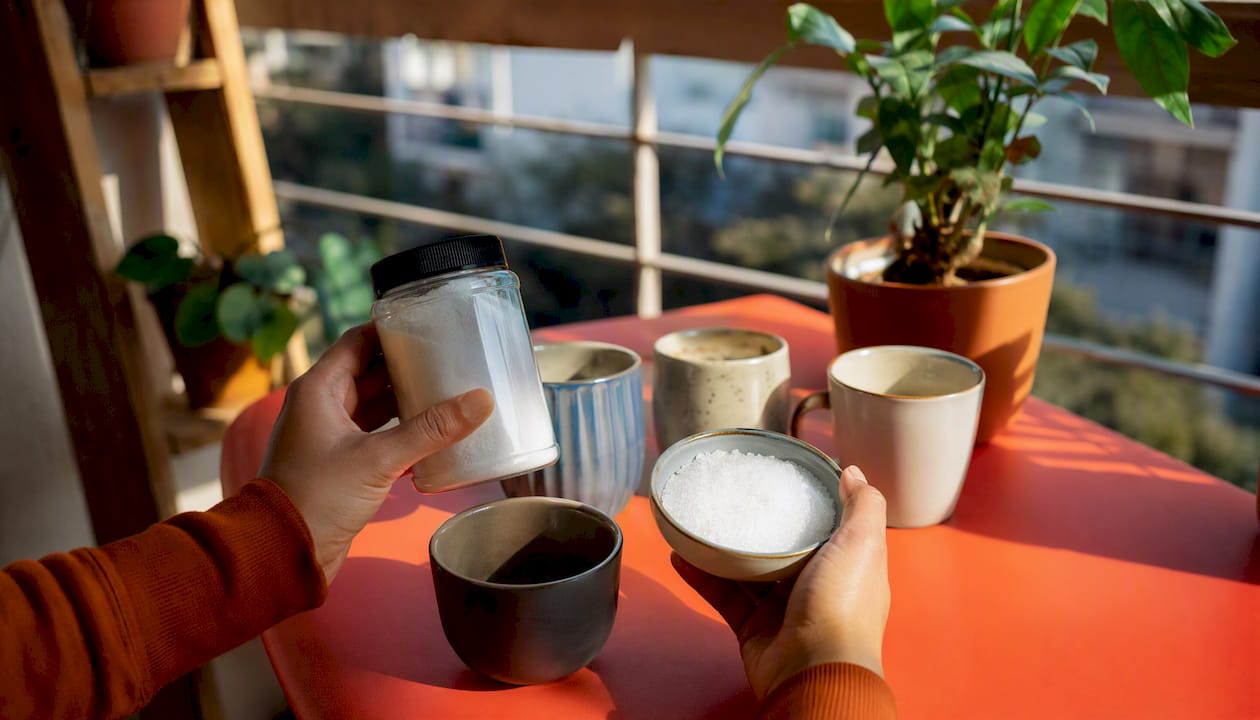
Non-glycemic sweeteners like stevia, monk fruit, erythritol, and allulose allow you to keep the sweetness without a blood-glucose response. Each behaves differently in hot milk, so the right pick depends on your palate and how you brew.
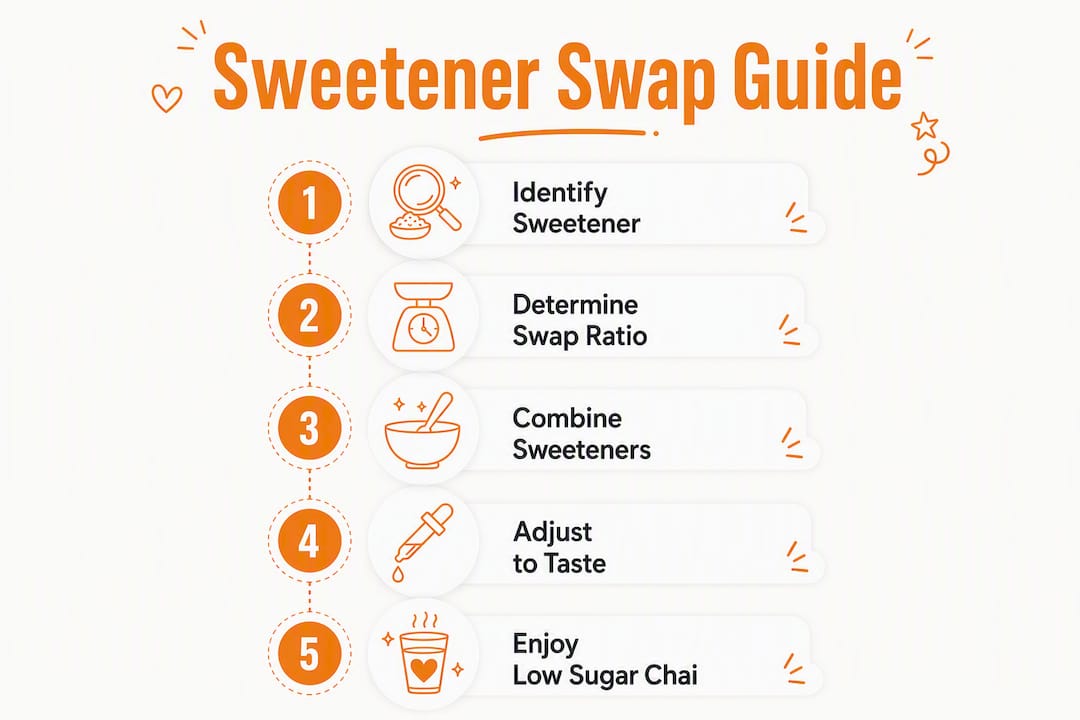
| Sweetener | Swap ratio vs. 1 tsp sugar | Aftertaste | Heat stable? | Best use |
|---|---|---|---|---|
| Stevia (liquid) | 6–7 drops | Slight herbal | Yes | Hot chai, concentrate |
| Monk fruit (granular) | 1:1 | Mild, clean | Yes | Latte, dry mix |
| Erythritol | 1:1 | Mild cooling | Yes | Baked chai, latte |
| Allulose | 1:1 | Very clean | Yes | Concentrate, cold chai |
| Honey (small amount) | ½ tsp | Floral | Moderate | Occasional use, low-GI |
| Maple syrup (small amount) | ½ tsp | Caramel | Moderate | Flavor layering |
Pros and cons at a glance:
- Stevia: Zero calories, widely available, but the herbal note can clash with delicate spice blends if overused.
- Monk fruit: Clean sweetness, keto-friendly, and blends well with cardamom and cinnamon without competing.
- Erythritol: Good volume for baking-style chai drinks; a slight cooling sensation can feel odd in a hot cup if used heavily.
- Allulose: The most syrup-like texture of the group, which makes it excellent for concentrates where mouthfeel matters.
- Honey or maple syrup: Higher glycemic impact than the above, but a half-teaspoon adds genuine flavor complexity. Use sparingly.
Combining two sweeteners, such as a small amount of monk fruit with a drop of liquid stevia, often produces a cleaner, more rounded taste than using either at full dose. Lower total volume, better flavor.
What should you look for on store-bought chai labels?
Pre-mixed chai products vary widely. Some deliver a genuinely low-sugar experience; others hide significant added sugar behind small serving sizes or vague ingredient names.
Label-reading checklist:
- Sugar per serving: Look for under 5 g per serving as a baseline for a low-sugar option.
- Added syrups and HFCS: High-fructose corn syrup, cane syrup, and “chai syrup” near the top of the ingredient list are red flags.
- Maltodextrin: A filler with a high glycemic index that often appears in powdered mixes. Treat it like sugar.
- “Natural flavors”: This catch-all can include sweetening agents. If it appears alongside a high sugar count, the flavor may be contributing.
- Serving size traps: A mix labeled “7 g sugar” may be based on a 4-oz serving. Check whether you actually drink 4 oz or 12 oz.
When a premix makes sense:
- Travel or office situations where you cannot brew from scratch.
- When the premix is unsweetened or lightly sweetened and you add your own sweetener.
- When the spice blend is complex enough to replace a full recipe.
When you are home and have five minutes, brewing from a dry spice mix or concentrate gives you better control. Defaulting to an unsweetened base and adding your own sweetener is the single most effective way to cut hidden sugars from your daily chai.
How do you order a lower-sugar chai at a café?
Simple custom requests usually cut the sugar in a café chai significantly. Most baristas are happy to accommodate, especially at independent shops.
Scripts you can use at the counter:
- “Can I get a chai with brewed tea and steamed unsweetened almond milk, no syrup? I’ll sweeten it myself.”
- “Do you use a pre-sweetened concentrate? If so, can you do half the usual amount and top up with unsweetened milk?”
- “I’d love a chai with just the spice blend and oat milk, no added sugar.”
Barista tips:
- Ask directly whether the chai base is pre-sweetened. Many cafés use a concentrate that already contains 20–30 g of sugar per pump.
- Request unsweetened milk explicitly. Baristas sometimes default to sweetened oat or almond milk without mentioning it.
- Ask for pumps reduced or removed if the café uses a syrup-based system.
- Confirm the serving size. A 16-oz cup with two pumps of concentrate contains far more sugar than a 12-oz with one.
If a café only offers a pre-sweetened concentrate and will not customize, the unsweetened milk alternatives approach still helps at the margin, but you cannot fully control the sugar. That is a reasonable moment to bring your own premix to the office instead.
Pro Tip: Carry a small packet of monk fruit or stevia. Most cafés will let you sweeten your own cup, and you avoid the guesswork entirely.
What does low-sugar chai actually do for your blood sugar?
Cutting added sugar from your chai reduces the postprandial glucose spike that follows a sweetened drink. Milk choice amplifies that effect considerably.
Commercial chai lattes can contain close to 40 g of added sugar per serving. Switching to a homemade low-sugar version brings that to roughly 4–6 g per serving, mostly from naturally occurring sugar in the milk and a tiny amount from optional flavor enhancers like blackstrap molasses.
Practical tactics to blunt glucose absorption:
- Choose full-fat unsweetened coconut milk or unsweetened almond milk. The fat content slows glucose absorption, and pairing fat with chai improves satiety.
- Drink chai alongside or after a meal with protein rather than on an empty stomach.
- Use unsweetened soy or almond milk as your default base. Both are lower in natural sugars than oat milk.
- If you use honey or maple syrup, keep it to half a teaspoon. The flavor contribution is real, but so is the glycemic impact at larger amounts.
The spices themselves contribute here too. Cinnamon and cardamom have been studied for their potential to support healthy glucose metabolism, which is one reason a well-spiced chai feels satisfying even with very little added sweetener.
How do you fix thin, bitter, or flat low-sugar chai?
The three most common problems when cutting sugar are a thin body, a bitter edge, and a flat, one-dimensional flavor. Each has a quick fix.
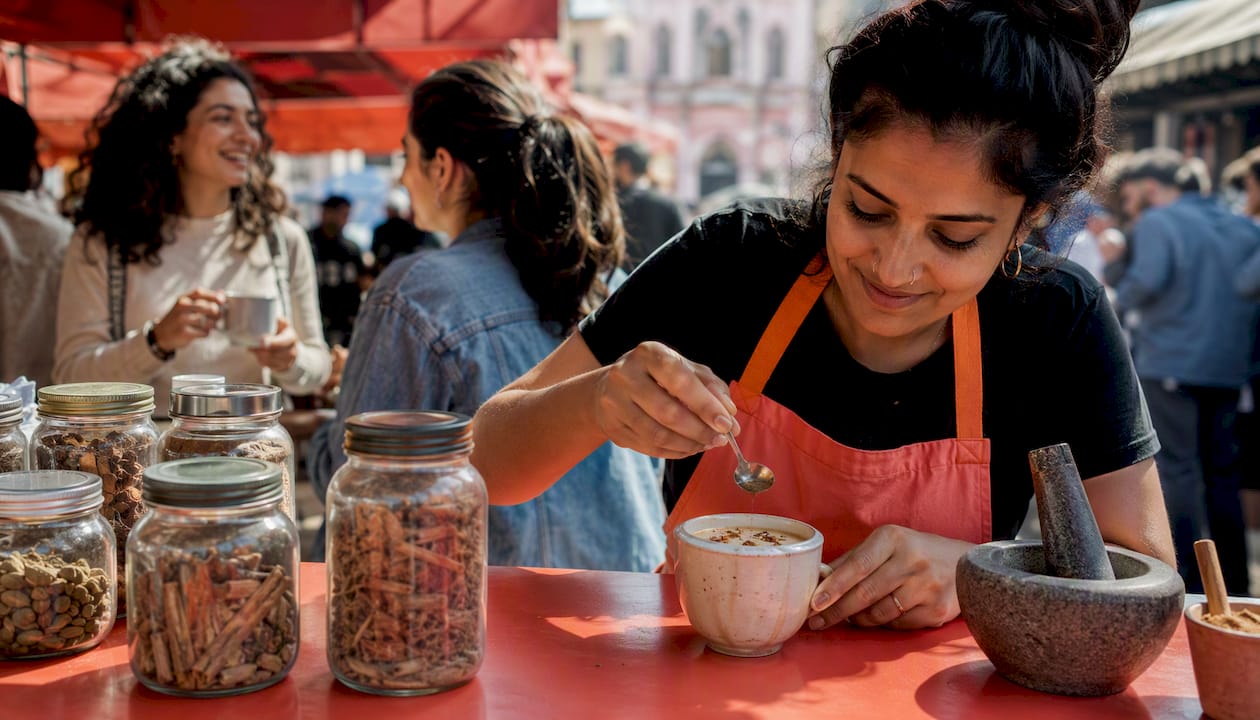
Pro Tip: A teaspoon of unsulphured blackstrap molasses adds complex, slightly bitter depth that mimics the mouthfeel of syrup with a fraction of the sugar. It is the single best trick for making a low-sugar chai feel rich rather than stripped-down.
Quick-fix list:
- Thin body: Reduce the water by 25% or increase tea to 1.5 tablespoons loose-leaf. More tea solids = more body.
- Bitter cup: Shorten the steep to 4 minutes and never let the brew boil hard. Black tea releases harsh tannins above a rolling boil.
- Flat flavor: Add a pinch of salt (it suppresses bitterness and lifts spice notes), or increase toasted cardamom and cinnamon by 25%.
- Lacking sweetness perception: Toast whole spices before brewing. Freshly toasted spices create aromatic complexity that your brain reads as sweetness, reducing the amount of actual sweetener you need.
- Mouthfeel missing: Try allulose as your sweetener. Its syrup-like texture adds body that erythritol and stevia cannot replicate.
When a chai tastes off, adjust spice ratios before reaching for more sweetener. Nine times out of ten, the problem is under-spiced tea, not insufficient sugar.
Key Takeaways
Homemade low-sugar chai, built on toasted spices and a non-glycemic sweetener, can cut added sugar from roughly 40 g per serving to around 4–6 g per serving, mainly from the milk itself rather than added sweeteners.
| Point | Details |
|---|---|
| Make-ahead concentrate | Brew once, refrigerate up to 7 days, or freeze in cubes for instant iced chai. |
| Dry spice mix | Blend once, store 4–6 weeks, and steep on demand for a quick low-calorie chai tea. |
| Best sweetener picks | Monk fruit and allulose give the cleanest taste; combine two sweeteners to reduce total volume. |
| Café ordering | Ask whether the base is pre-sweetened, request unsweetened milk, and carry your own sweetener packet. |
| Dropoutchaiwala premix | Masala and ginger pouches deliver consistent spice balance so you control sweetness yourself. |
Why the “just use less sugar” advice misses the point
Most articles on chai with less sugar stop at “swap sugar for stevia and call it a day.” That framing skips the real issue: when you remove sweetness from a drink, you expose every flaw in the spice blend. A weak, under-toasted masala mix tastes hollow without sugar to prop it up. A strong, well-built one tastes complete.
The better question is not “how do I sweeten this less?” but “how do I make this so flavorful that I don’t need much sweetness at all?” That shift changes everything. It means investing in whole spices, toasting them properly, and using a strong tea base. It means understanding that allulose adds mouthfeel, not just sweetness, and that blackstrap molasses is a flavor tool, not a sugar substitute.
Premix packs, when they are formulated with real spice depth rather than flavoring agents, fit this philosophy naturally. You are not fighting the sweetness; you are building flavor that makes sweetness optional. That is the approach Dropoutchaiwala takes with its spice-forward blends, and it is the same logic behind every recipe in this article.
Dropoutchaiwala premix packs: consistent spice, your sweetness

Dropoutchaiwala’s premix chai packs are built around real spice depth, which means you add your own sweetener and control exactly how much goes in. The masala, ginger, and classic pouches all use traditional spice blends formulated for flavor first, so a small amount of monk fruit or stevia is genuinely all you need. No hidden syrups, no guessing at ingredient lists.
The packs are available online and for pickup at retail locations, and the chai premix range covers the flavors most suited to a low-sugar approach. For a spice-forward cup with natural warmth, the ginger chai pouch is a strong starting point. If you want the full masala experience, the masala chai pouch delivers it consistently every time.
Browse the full range at Dropoutchaiwala and use the loyalty program to earn on every order. Quick pickup, real spices, and sweetness entirely on your terms.
Cited sources and further reading
- This Is How to Make an Easy Sugar-Free Chai Latte
- A Healthier Version of the Starbucks Chai Recipe
- Homemade Chai Tea Latte Recipe | Wellness Mama
- Homemade Masala Chai (Dairy-free and Sugar-free) | Healthy Hippie Habits
- Enjoy Guilt-Free: Low Sugar Chai Tea Latte Recipe + Tips
- Chai Tea Benefits: A Spiced Drink with Plenty of Advantages
- NCBI: Sweetener and glycemic impact research
- Cell Metabolism: Nutrient absorption research
- Low-Glycemic Chai Latte Recipe | Jennifer Dawn
- Skinny Chai Tea Latte Recipe | Coffeesperto
- Dropoutchaiwala: Masala Chai and spice blend background
