

Yes, you can make vegan chai that matches (some say beats) the dairy version, and it comes down to two things: which plant milk you pick and when you add it. High-fat options like oat, cashew, or full-fat coconut milk carry the spice flavors the way whole milk does, and the fastest reliable method is simple. Boil water with your spices and ginger, steep black tea briefly, then fold in heated plant milk off the heat. If you’d rather skip the simmering and straining altogether, Dropoutchaiwala’s premix packs give you that same spice balance in under two minutes.
Key Takeaways
Vegan chai matches dairy chai in richness when you use a high-fat plant milk and follow the boil-steep-add-milk sequence in that exact order.
| Point | Details |
|---|---|
| Pick the right milk | Oat, cashew, and full-fat coconut milk hold up best under heat and deliver the creamiest texture. |
| Follow the extraction order | Boil spices first, steep tea briefly, then add heated milk off the flame to avoid bitterness and curdling. |
| Keep tea steep short | Limit black tea to 2 to 3 minutes; longer steeps pull out tannins and turn the cup bitter. |
| Fix texture with cashews | A spoonful of blended soaked cashews adds body to thin chai without changing the spice balance. |
| Try a premix for speed | Dropoutchaiwala’s masala, classic, ginger, and cardamom pouches are formulated for dairy-free milk from the start. |
Table of Contents
- How to Make Vegan Masala Chai at Home
- Which Plant Milk Makes the Creamiest Vegan Chai?
- What’s the Right Ratio for Homemade Chai Masala?
- Why Extraction Order Changes the Whole Cup
- How Do You Fix Bitter, Thin, or Separated Chai?
- Why Choose a Premix Instead of Building It From Scratch
- Where to Get Dropout Chaiwala Premix
- Frequently Asked Questions
- Sources
How to Make Vegan Masala Chai at Home
This recipe makes two generous cups and takes about 10 minutes start to finish.
Ingredients:
- 1½ cups water
- 4 green cardamom pods, lightly crushed
- 1 small cinnamon stick
- 3 whole cloves
- 1 inch fresh ginger, sliced or grated
- 2 teaspoons loose black tea (or 2 tea bags)
- 1 cup oat, cashew, or full-fat coconut milk
- Sweetener to taste (maple syrup, coconut sugar, or jaggery)
Method:
- Bring the water, cardamom, cinnamon, cloves, and ginger to a boil in a small saucepan. Simmer for a few minutes to pull the essential oils out of the spices.
- Add the black tea and let it steep for 2 to 3 minutes, no longer. This is the step most home brewers get wrong.
- Remove from heat immediately and strain into cups or back into the pot.
- Warm your plant milk separately, just until it steams. Never let it boil.
- Combine the strained tea base with the warm milk, add sweetener, and stir.
Timing matters more than most recipes admit. Steeping black tea beyond 3 to 5 minutes pulls out excess tannins, which is where bitterness comes from, not the spices. And heating milk separately rather than boiling it alongside the tea keeps the proteins from breaking and curdling.
Want it stronger? Simmer the spices an extra 2 minutes before adding tea. Want it iced? Make a double-strength batch, chill it, and pour over ice with cold plant milk.
Pro Tip: For a café-style finish with a light foam on top, hand-blend the strained chai with your heated plant milk for 10 to 15 seconds before pouring. It emulsifies the fat and gives you that microfoam texture without a milk steamer.

Which Plant Milk Makes the Creamiest Vegan Chai?
Oat, cashew, and full-fat coconut milk consistently outperform thinner options because of their fat content. Oat milk brings a neutral, slightly sweet base that lets the spices lead. Cashew milk is the richest of the three but thickens fast on heat, so keep the warming brief and controlled. Full-fat canned coconut milk produces an exceptionally creamy, almost dessert-like chai latte; however, its tropical note is more noticeable than the others.
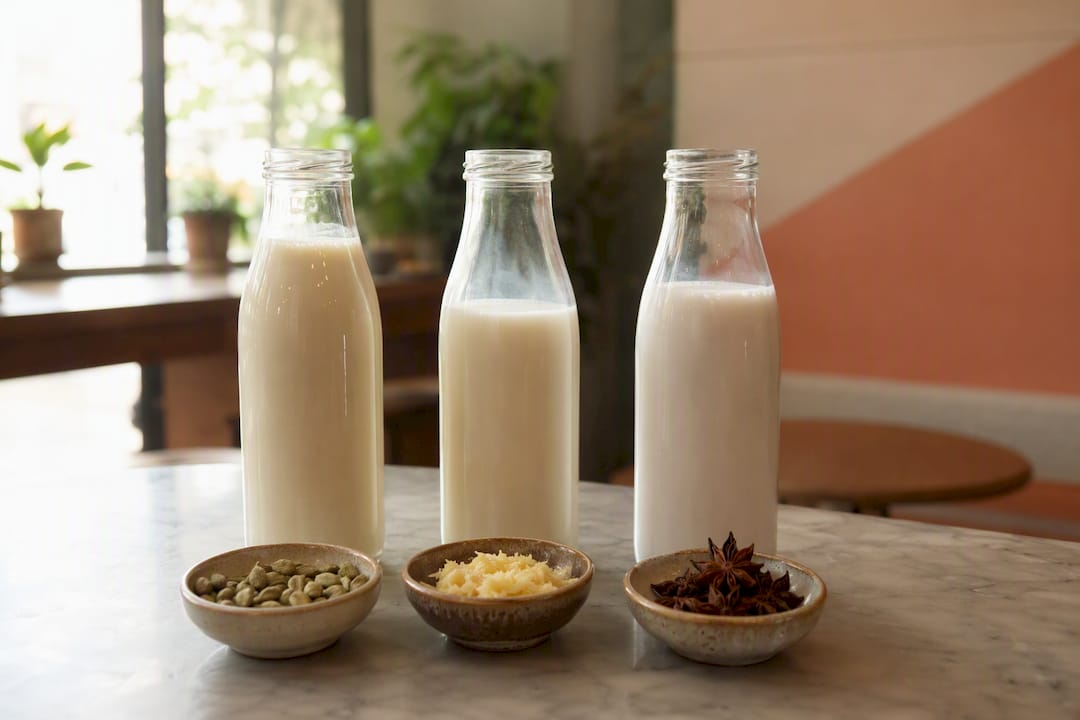
Almond and soy milks work in a pinch, but formulation varies wildly between brands, and some separate or curdle at high heat. If you’re buying at the store, look for a barista or full-fat label. They’re formulated to hold up under heat.
Pro Tip: If your chai still feels thin after switching milks, blend a tablespoon of soaked raw cashews into the warm milk before combining it with the tea. It adds body without touching your spice balance.
What’s the Right Ratio for Homemade Chai Masala?
A reliable starting ratio for chai masala, by volume, is 6 parts cardamom to 2 parts cinnamon to 1 part clove to 1 part black pepper. Add a small amount of dried ginger or star anise if you like a bolder profile.
A few handling rules make a real difference:
- Lightly crush whole spices instead of grinding them to powder. Pulverizing releases bitter compounds along with the aromatic oils you actually want.
- Ground spice mixes are more convenient but lose potency fast, so use slightly less per cup than you would with fresh-crushed whole spices.
- Store your mix in an airtight jar, away from light and heat, and it holds its aroma for about a month.
- Use roughly 1 to 1½ teaspoons of the ground mix, or the crushed whole equivalent, per 2 cups of water.
Scaling up for a full jar just means multiplying the ratio, so a batch built on 12 tablespoons of cardamom keeps the same proportions.
Why Extraction Order Changes the Whole Cup
The sequence you follow (spices first, tea second, milk last) isn’t a stylistic choice. It’s chemistry. Boiling the spices in water first pulls out their essential oils, which need heat and time to release. Tea, on the other hand, only needs a short steep before its tannins start dominating the flavor. Milk added at the end simply carries what’s already extracted; it doesn’t need to cook.
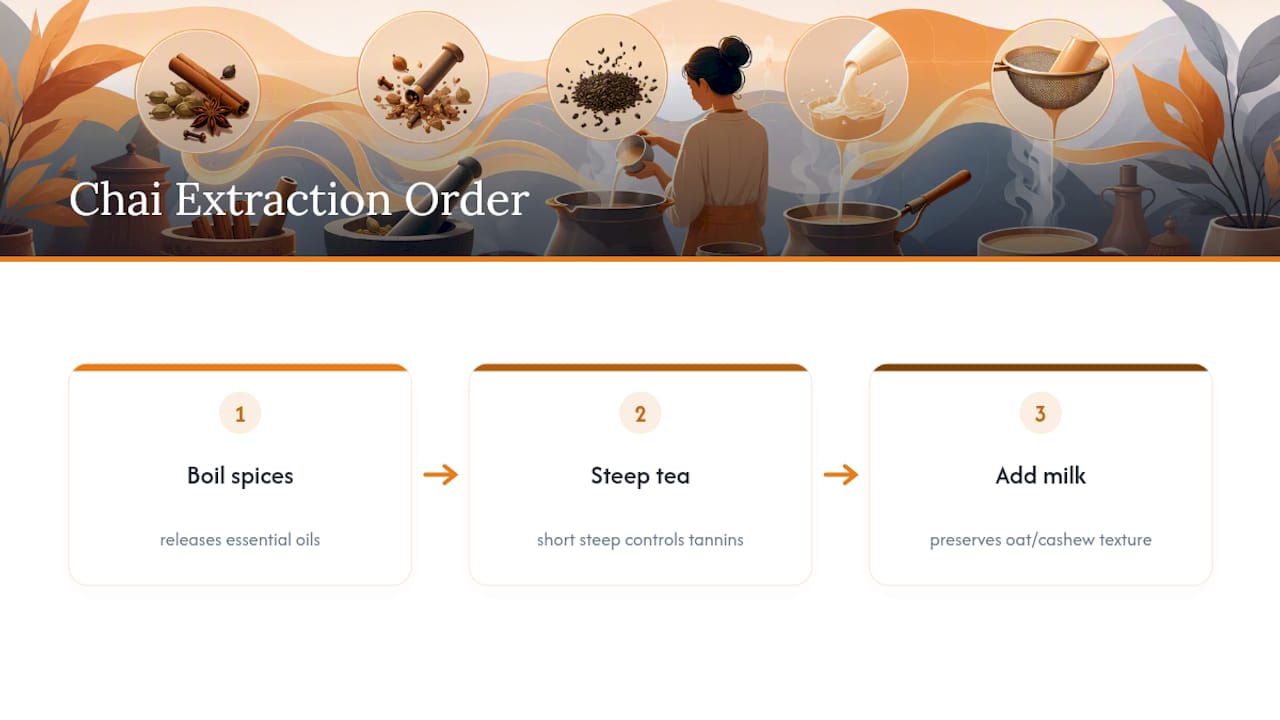
You can test this yourself: brew one cup with tea and milk boiled together from the start, and another using the boil, steep, add-milk sequence, guided by tips on natural sweeteners that pair well with chai for the finishing touch. The first will taste flatter and often slightly bitter. Recipes that separate the steps consistently produce a rounder, spicier result, and oat or cashew milk holds its texture better in the second method since it’s never subjected to a rolling boil.
Pro Tip: For a lighter brew, cut the tea steep to 90 seconds. For something bolder, extend the spice boil by 2 to 3 minutes rather than steeping the tea longer.
How Do You Fix Bitter, Thin, or Separated Chai?
Run through this quick checklist before you assume the recipe failed:
- Bitter chai: Your tea steeped too long or the water was too hot when you added it. Cut the steep to 2 to 3 minutes and pull the tea out promptly.
- Separated or curdled milk: You likely boiled the milk directly with the tea. Heat plant milk separately and pour it in slowly, off the direct flame.
- Thin, watery texture: Switch to a barista or full-fat plant milk, or blend in a spoonful of soaked cashews for extra body.
- Bland or weak spice flavor: Extend your spice boil by a few minutes, or check that your whole spices are fresh. Dried spices lose potency after about six months.
Leftover chai keeps for a day in the fridge. Reheat it gently on the stove rather than the microwave, and never let it simmer for long, or you’ll pull more tannins from any tea still in the liquid.
Why Choose a Premix Instead of Building It From Scratch
If the recipe above sounds great in theory but you don’t have 10 minutes most mornings, a well-made premix solves that without asking you to give up the spice complexity. Dropoutchaiwala’s premix packs come in masala, classic, ginger, and cardamom, and each one is formulated to work with plant milk from the start rather than relying on dairy fat to carry the flavor.
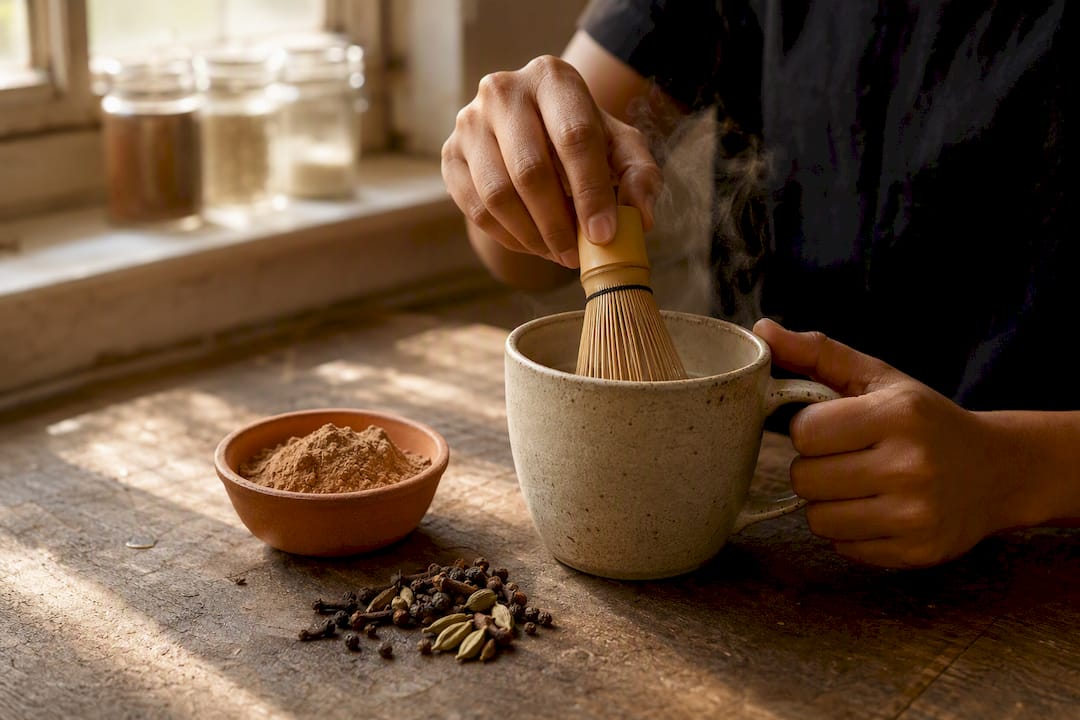
To use it, heat your oat, cashew, or coconut milk separately until steaming, stir in the premix to taste, and adjust for strength. It’s the same principle as the from-scratch method (extract, then combine), just without the boiling and straining. For readers who want the ritual on a weekday morning without the cleanup, it’s a genuinely solid trade.
A note on chai as a daily ritual
Chai has always been less about the exact recipe and more about the five minutes it buys you. I’d rather see you experiment with your cardamom-to-ginger ratio than chase a “perfect” formula. Treat your first few batches as tests, not failures.
Where to Get Dropout Chaiwala Premix
If today’s the day you’d rather skip the saucepan altogether, Dropoutchaiwala’s chai premix collection is built for exactly that. Every pouch, whether it’s the masala, the ginger, or the cardamom blend, is made with dairy-free preparation in mind, so you’re not fighting the formula to make it work with oat or cashew milk.

Order online or pick it up in person if you’re near one of Dropoutchaiwala’s retail spots, and if you’re not sure which flavor to start with, the classic pouch is the easiest entry point. Grab a single pouch, try it against your homemade version, and join the loyalty program on your first order so every cup after that earns you something back. Head to Dropoutchaiwala’s shop to browse the full lineup.
Frequently Asked Questions
Is chai naturally vegan without any substitutions? No. Traditional masala chai is brewed with dairy milk, so making it vegan requires swapping in a plant milk like oat, cashew, or full-fat coconut and adjusting your technique slightly for heat sensitivity.
Can I use almond or soy milk for chai? You can, but results vary by brand. Some almond and soy milks separate or curdle at high heat, so test a small batch first or choose a barista-formulated version.
How long does homemade chai masala last? Stored airtight in a cool, dark spot, a whole-spice chai masala mix keeps its aroma for about a month before the flavor starts fading.
What’s the fastest way to get authentic chai flavor without cooking? A quality premix like Dropoutchaiwala’s masala or ginger pouches delivers the same spice complexity as a from-scratch batch. Just heat your plant milk and stir it in.
Can I sweeten vegan chai without refined sugar? Yes. Maple syrup, coconut sugar, and jaggery all work well and complement the warm spice notes better than plain white sugar.
Sources
- Vegan Masala Chai - Sandhya’s Kitchen
- Easy Masala Chai Recipe - Minimalist Baker Recipes
- Easy Vegan Chai Latte With Coconut Milk Recipe
- Vegan Indian Chai Tea. Masala Chai. - Vegan Richa
