

For most home chai drinkers, Dropoutchaiwala’s Masala Chai premix is the strongest pick: real ground spices, no artificial flavors, and a format that works beautifully hot or iced with any milk. If you want something widely available at a grocery store, Tazo Classic Chai concentrate is the boldest off-the-shelf option. For spice-forward drinkers, Bhakti Fresh Ginger Chai Sugar Free Unsweetened delivers intense ginger without added sugar. Budget shoppers will find Trader Joe’s Spiced Chai punches well above its price. And for oat-milk lattes specifically, Minor Figures Barista Chai Concentrate is engineered for exactly that.
A quick note on flavor preferences: spice-forward drinkers will gravitate toward Bhakti, Dropoutchaiwala’s Ginger Chai, or Stash Double Spice Chai. If you prefer a sweeter, milder cup, Oregon Chai or Yogi Classic Organic Chai will suit you better. The picks below reflect a tasting-first approach, not just label reading.
- Best overall: Dropoutchaiwala Masala Chai — real spices, DTC ordering, hot/iced versatility
- Best grocery concentrate: Tazo Classic Chai — bold, widely available, Starbucks-style profile
- Best sugar-free: Bhakti Fresh Ginger Chai Sugar Free Unsweetened — high ginger intensity, zero added sugar
- Best budget: Trader Joe’s Spiced Chai — strong flavor-to-price ratio
- Best for oat milk: Minor Figures Barista Chai Concentrate — specifically balanced for plant milks
- Best sampler: Dropoutchaiwala Chai Premix collection — try masala, ginger, cardamom, and classic before committing
According to Sporked’s hands-on tasting of 11 concentrates, the best chai mixes share one trait: a real black-tea backbone that keeps the drink from tasting like a spiced milkshake.
Table of Contents
- The best chai latte mixes ranked: full comparison
- How we tested these chai mixes
- How to pick the right chai mix for your taste and routine
- How to make a barista-quality chai latte at home
- What makes a store-bought chai taste authentic
- Key Takeaways
- The chai you buy matters less than you think
- Dropout Chaiwala premix: real spices, real chai, delivered to your door
- Sources and further reading
The best chai latte mixes ranked: full comparison
The 12 options below cover every format (concentrate, powder premix, syrup-style) and every budget. Each entry leads with what actually matters: flavor balance, ingredient quality, and how it performs when you mix it with milk at home.
| Product | Best For | Flavor Balance | Format | Ingredients | Availability | Caffeine | Ease of Prep |
|---|---|---|---|---|---|---|---|
| Dropoutchaiwala Masala Chai | Hot/iced, health-conscious | Spice-forward, restrained sweet | Powder premix | Real ground spices, no artificial flavors | Online (DTC) | Moderate | Very easy — scoop and mix |
| Dropoutchaiwala Ginger Chai | Spice lovers, digestion-focused | High ginger, low sweet | Powder premix | Fresh ginger profile, real spices | Online (DTC) | Moderate | Very easy |
| Dropoutchaiwala Cardamom Chai | Aromatic/dessert-style lattes | Floral, cardamom-led | Powder premix | Real cardamom, transparent label | Online (DTC) | Moderate | Very easy |
| Dropoutchaiwala Classic Chai | Everyday hot/iced chai | Balanced, classic masala | Powder premix | Traditional spice blend | Online (DTC) | Moderate | Very easy |
| Tazo Classic Chai | Starbucks-style dupe | Bold, zippy spice | Concentrate | Black tea, spice extracts | National grocery | Moderate | Easy — 1:1 with milk |
| Bhakti Fresh Ginger Chai Sugar Free | Sugar-conscious drinkers | Intense ginger, dry finish | Concentrate | Cold-pressed ginger, no added sugar | Specialty/online | Moderate | Easy |
| Trader Joe’s Spiced Chai | Budget shoppers | Robust multi-spice, mild sweet | Concentrate | Spice blend, some natural flavors | Trader Joe’s only | Moderate | Easy |
| Minor Figures Barista Chai | Oat-milk/plant-milk lattes | Balanced tea and spice | Concentrate | Tea, spice blend | Specialty/online | Moderate | Easy — designed for frothing |
| Oregon Chai | Milder, sweeter chai | Sweet, mellow | Concentrate/powder | Black tea, vanilla, honey, spices | National grocery | Moderate | Easy |
| Rishi Organic Masala Chai | Whole-spice authenticity | Full-bodied, spice-visible | Loose/concentrate | Visible real spices, organic | Specialty/online | Moderate–High | Moderate |
| Stash Double Spice Chai | Pronounced spice drinkers | Cinnamon/ginger-forward | Concentrate | Spice blend, some sweetener | Grocery/online | Moderate | Easy |
| Yogi Classic Organic Chai | Cinnamon lovers, organic buyers | Cinnamon-forward, cozy | Powder/bags | Organic, cinnamon-led | National grocery | Low–Moderate | Easy |
Dropoutchaiwala Masala Chai
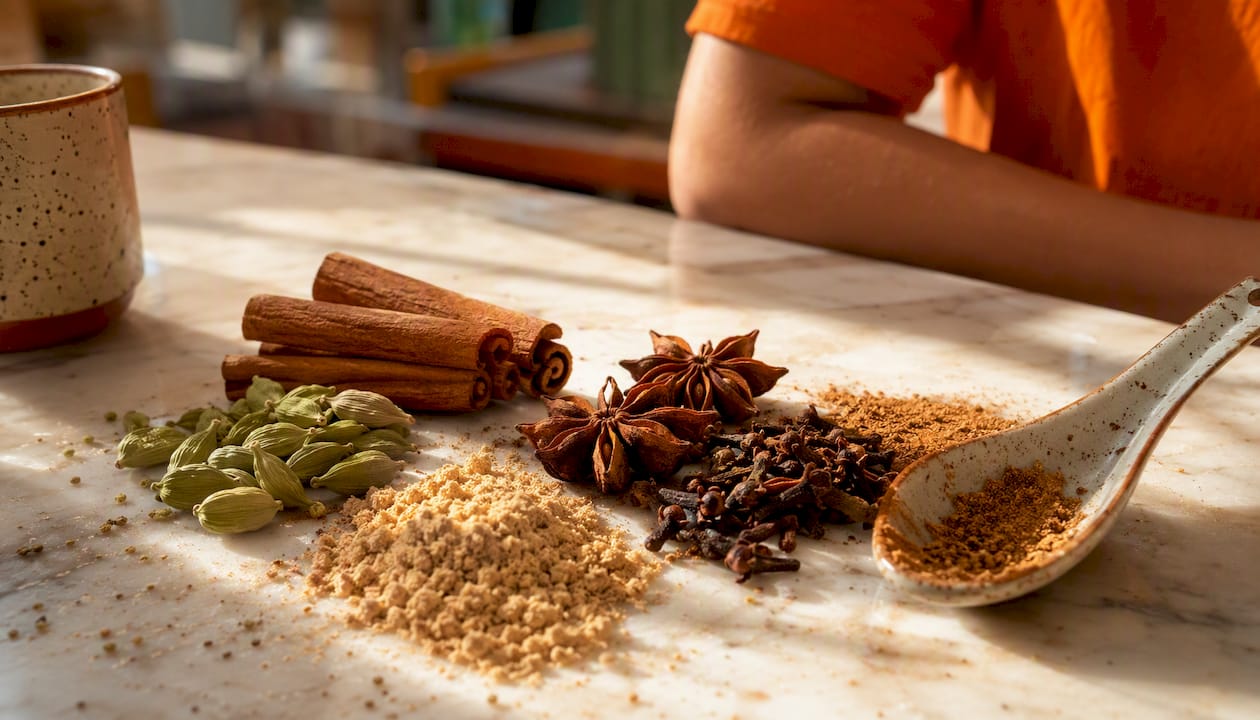
The standout quality here is ingredient honesty: real ground spices with no artificial flavors or vague “natural flavor” catch-alls. The powder premix format dissolves cleanly in steamed milk and holds its spice character over ice, which many concentrates fail to do. For anyone who wants to understand exactly what makes masala chai authentic, the spice profile here reads like a textbook answer.
Pros: Real spice blend, hot/iced versatility, transparent label, DTC convenience Cons: Online-only in the US (no physical grocery shelf presence)
Dropoutchaiwala Ginger Chai and Cardamom Chai
These two are for drinkers with a specific spice preference. The Ginger Chai leans hard into fresh ginger intensity, which makes it a natural fit for digestion-focused shoppers and anyone who finds standard masala blends too mild. The Cardamom Chai goes the other direction: floral, aromatic, and bakery-adjacent. Both share the same real-spice commitment as the Masala.
Pros: Clear single-spice focus, real ingredients, works well with oat milk Cons: Flavor intensity may be too pronounced for everyday drinkers
Tazo Classic Chai
Tazo is the closest grocery-store equivalent to what you get at Starbucks, which is either a selling point or a warning depending on your palate. The spice profile is bold and zippy, with a strong black-tea backbone that Sporked’s testers consistently flagged as one of the better grocery options. It runs sweet, though, so dialing back the ratio (try 1:1.5 concentrate to milk) tames it.

Pros: Widely available, bold flavor, strong tea backbone Cons: High sugar content, artificial flavor notes on the finish
Bhakti Fresh Ginger Chai Sugar Free Unsweetened
The sugar-free pick with no compromise on spice. Cold-pressed ginger gives this concentrate a fresh, almost sharp heat that survives dilution in iced drinks. Because there is no added sweetener, you control the final cup entirely. Add a small pour of maple syrup or honey if you want sweetness; leave it out for a genuinely dry, spice-forward latte.
Pros: High ginger intensity, zero added sugar, iced performance Cons: Dry finish may need sweetener for some drinkers; specialty availability
Trader Joe’s Spiced Chai
The price-to-flavor ratio here is genuinely hard to beat. The multi-spice blend is robust enough to hold up in a 1:1 mix with whole milk, and the sweetness level sits in a middle range that most drinkers find approachable. The catch: it is only available at Trader Joe’s locations, so it is not a reliable pantry staple if you do not live near one.
Pros: Excellent value, solid spice blend, widely liked flavor profile Cons: Trader Joe’s exclusive, not available online
Minor Figures Barista Chai Concentrate
This one is engineered specifically for plant milks, and it shows. The spice-to-tea ratio is calibrated so that oat milk’s natural sweetness complements rather than overwhelms the blend. If you are making oat-milk lattes at home and want a concentrate that froths cleanly, Minor Figures is the most purposeful option in this category.
Pros: Designed for plant milks, froths well, balanced profile Cons: Less widely available, higher price per serving
Oregon Chai, Stash Double Spice, and Yogi Classic Organic
These three cover the sweeter, more accessible end of the spectrum. Oregon Chai’s powder format (available at WebstaurantStore in a 3 lb. bulk bag) mixes at 1 scoop per 8 oz. of steamed milk and produces a consistent, vanilla-forward cup. Stash Double Spice tips toward cinnamon and ginger with a syrupy sweetness that some drinkers love and others find cloying. Yogi Classic Organic is the cinnamon-forward choice for organic shoppers, with a cozy, low-caffeine profile that works well as an evening drink.
Rishi Organic Masala Chai
Rishi is the specialty-store pick for readers who want visible whole spices and a full-bodied black-tea base. Tasting Table’s ranked roundup consistently notes that visible real spices correlate with higher perceived authenticity, and Rishi delivers on that. The prep is slightly more involved than a simple concentrate, but the flavor payoff is real.
Pros: Whole spices, organic, strong tea backbone Cons: More prep effort, specialty availability, higher price
Pro Tip: For iced chai, cold-pressed ginger and visible ground spices hold their flavor better over ice than extract-based concentrates. If your iced chai tastes watery, the concentrate is likely extract-based.
How we tested these chai mixes
Every mix was prepared using a consistent baseline before any adjustments were made.
- Baseline ratio: 1:1 concentrate to whole milk (hot), following the most common instruction pattern across product labels and third-party reviews.
- Milk types tested: Whole dairy milk, oat milk (Oatly Barista), and unsweetened almond milk for each concentrate.
- Hot preparation: Milk steamed to 150°F using a handheld frother; concentrate or powder mixed in immediately.
- Iced preparation: Concentrate poured over ice, cold milk added at 1:1 ratio, stirred for 20 seconds.
- Scoring criteria: Flavor balance (spice vs. sweetness), spice clarity (can you identify individual spices?), tea backbone (tannin presence), mouthfeel (body vs. watery), ease of prep, and value per serving.
- Ratio adjustments: Where a mix tasted too sweet or too weak at baseline, the ratio was adjusted (e.g., 1:1.5 or 2:1 concentrate to milk) and rescored.
- Blind vs. open: Products were tasted blind for initial scoring, then re-evaluated with labels visible for ingredient cross-referencing.
The scoring is qualitative rather than numeric, reflecting the reality that spice preference is personal. A mix rated “spice-forward” here may be the perfect daily driver for one reader and too intense for another.
How to pick the right chai mix for your taste and routine
The single biggest mistake shoppers make is buying a chai mix based on brand recognition rather than format fit. Here is what to check before you buy.
Flavor preference:
- Spice-forward and dry: Bhakti Fresh Ginger Sugar Free, Dropoutchaiwala Ginger Chai, Stash Double Spice
- Balanced and medium-sweet: Dropoutchaiwala Masala Chai, Tazo Classic, Trader Joe’s Spiced Chai
- Mild and sweet: Oregon Chai, Yogi Classic Organic
Format:
- Concentrate: ready to mix, refrigerate after opening, typically a 7–10 day use window
- Powder premix: longer pantry shelf life, no refrigeration needed, slightly different mouthfeel
- Syrup-style: high sugar, best used sparingly as a flavoring rather than a base
Milk compatibility:
- Dairy milk: works with almost every format
- Oat milk: Minor Figures Barista Chai and Dropoutchaiwala premixes are specifically well-suited
- Almond milk: thinner body; choose a spice-forward concentrate to compensate
Dietary flags to check:
- Sugar per serving (some concentrates exceed 25g per 8 oz. serving)
- “Natural flavors” on the label: this term can mask extract-based spicing rather than real ground spices
- High-fructose corn syrup: present in some budget options
- Gluten: most chai mixes are naturally gluten-free, but cross-contamination warnings vary by facility
Red flags on the label: vague “chai spice blend” with no named spices, HFCS in the first three ingredients, and no visible tea listed as a base ingredient.
Pro Tip: Buy a small bottle or single-serve packet before committing to a large container. Most specialty concentrates are available in 16 oz. bottles, which gives you enough for 8–10 lattes to test the flavor before buying in bulk.
How to make a barista-quality chai latte at home
Getting a great cup from a store-bought mix is mostly about ratio and milk prep. The mix matters, but barista technique is equally important for achieving coffee-shop texture at home.
Mixing ratios
| Format | Default Ratio | Stronger | Lighter |
|---|---|---|---|
| Concentrate | 1:1 (concentrate:milk) | 2:1 | 1:2 |
| Powder premix | 1 scoop per 8 oz. milk | 1.5 scoops | 1 scoop |
| Syrup-style | 2 tbsp. per 8 oz. milk | 3 tbsp. | 1 tbsp. |
Hot chai latte (concentrate or powder)
- Heat 8 oz. of your chosen milk to 150°F. Do not boil; boiling breaks down the milk proteins and kills the foam.
- If using a powder premix, whisk the powder into 2 oz. of hot water first until fully dissolved, then add the remaining milk.
- Froth the milk using a handheld frother, French press (pump 10–15 times), or steam wand.
- Pour the concentrate or dissolved powder into your mug first, then add the frothed milk over the top.
- Taste and adjust: add a small pour of maple syrup or honey if you want more sweetness; a pinch of ground black pepper amplifies the spice.
Iced chai latte
- Fill a glass with ice.
- Pour concentrate directly over ice at a 1:1 ratio with cold milk.
- Stir for 20 seconds. For a creamier texture, use a cocktail shaker and shake for 10 seconds before pouring.
- For cold-brew chai, steep a powder premix in cold water overnight (8–12 hours) and strain before adding milk.
Pro Tip: If your concentrate tastes too sweet, add a short-brewed shot of strong Assam black tea (steeped 4 minutes, strained) to the cup before adding the concentrate. The tannins cut the sweetness without diluting the spice. If the mix tastes weak, increase the ratio rather than adding sugar.
What makes a store-bought chai taste authentic
The gap between a great chai latte and a mediocre one usually comes down to two things: tea backbone and spice source.
Reviewer consensus across multiple tasting roundups points to sugar-to-spice balance as the primary quality signal. Mixes that lead with sweetness and use spice extracts rather than real ground spices tend to taste flat after the first sip. The black-tea tannins are what give chai its characteristic slight bitterness and body; without them, even a well-spiced mix can taste like a milkshake.
Real ground spices behave differently from extracts in two important ways. First, they release flavor gradually during steeping or mixing, which means the cup evolves as you drink it. Second, as Numi Tea’s powder formulation demonstrates, ultra-fine milling of real spices delivers clearer individual notes when rehydrated, and those notes survive dilution in iced drinks better than extract-based flavoring.
Processing method also shapes the final cup. Concentrates made with cold-pressed ginger (Bhakti is the clearest example) retain volatile aromatic compounds that heat-processed extracts lose. That is why cold-pressed ginger concentrates smell sharper and taste fresher, even after sitting in the fridge for a week.
What to look for on the label:
- Named spices in the ingredient list (cardamom, ginger, cinnamon, clove, black pepper) rather than “chai spice blend”
- Black tea listed as a base ingredient, not just “natural tea flavor”
- Cold-pressed or ground spice callouts on the front panel
- Sugar per serving under 15g for a balanced cup (many grocery concentrates exceed 20g)
Steeping tea directly in warm milk, rather than diluting a water-based brew, preserves tannins and mouthfeel better. This is why powder premixes that dissolve directly into milk often produce a richer body than water-diluted concentrates.
Key Takeaways
The best chai latte mix for most home drinkers is a real-spice powder premix or a cold-pressed ginger concentrate, chosen by flavor preference and format fit rather than brand name alone.
| Point | Details |
|---|---|
| Real spices beat extracts | Named spices on the label (cardamom, ginger, clove) deliver clearer flavor and better iced performance than “chai spice blend.” |
| Tea backbone is non-negotiable | A black-tea base with real tannins prevents the cup from tasting like a spiced milkshake. |
| Format shapes shelf life | Concentrates need refrigeration and a short use window after opening; powder premixes stay pantry-stable longer. |
| Ratio controls everything | Start with equal parts concentrate and milk; adjust mix strength before adding sweetener. |
| Dropoutchaiwala premix | The Masala, Ginger, Cardamom, and Classic premixes use real ground spices and work hot, iced, and with plant milks. |
The chai you buy matters less than you think
Here is the honest take: most chai drinkers spend too much time choosing the right brand and not enough time on the ratio and milk prep. A mediocre concentrate made at the right ratio with properly steamed oat milk will beat an excellent concentrate dumped cold into room-temperature dairy. The mix sets the ceiling; your technique determines where you land.
That said, ingredient quality does matter at the extremes. A concentrate built on high-fructose corn syrup and “natural chai flavor” cannot be rescued by good technique. The tannins are not there. The spice clarity is not there. You are working with a flavored sugar syrup, not a chai base.
The other thing most roundups understate: format fit is personal. Powder premixes suit people who want pantry stability and precise control over strength. Concentrates suit people who want speed and consistency. Neither is objectively better. The reader who makes one chai latte a week should probably buy a concentrate; the reader who makes one every morning should consider a powder premix for the shelf-life advantage alone.
Dropoutchaiwala’s premix range sits in an interesting position: it is not trying to be a grocery-shelf concentrate. It is a DTC product built around ingredient transparency and spice authenticity, which is a different value proposition than convenience-first options like Oregon Chai or Tazo. That distinction is worth knowing before you buy.
Dropout Chaiwala premix: real spices, real chai, delivered to your door
The concentrates and powders on this list cover a wide range of budgets and flavor profiles. But if you want a premix built on real ground spices with no artificial flavors, no vague “natural flavor” filler, and a format that works hot, iced, and with any plant milk, Dropoutchaiwala is the direct answer.

The Masala Chai, Ginger Chai, Cardamom Chai, and Classic Chai premixes each use a distinct spice profile, so you can match the blend to your palate rather than settling for a one-size-fits-all concentrate. Not sure which flavor suits you? The Chai Lovers Bundle lets you sample all four before committing to a larger order. Browse the full chai premix collection and place your order directly at dropoutchaiwala.com.
Sources and further reading
The product information, tasting notes, and preparation guidance in this article draw from the following sources. Manufacturer product pages were checked directly for ingredient lists and availability.
- Best Chai Concentrate for Barista-Worthy Chai at Home — Sporked
- 8 Store-Bought Chai Concentrates Ranked Worst To Best — Tasting Table
- Tea Latte Workflow: A Barista’s Step-by-Step Guide — Tri Crow Coffee
- How to Make Tea Lattes at Home: Easy Recipes & Tips — Tri Crow Coffee
- Perfect Chai Latte — A Couple Cooks
- Easy Chai Latte Recipe — Love and Lemons
