

Cardamom chai delivers real, complementary wellness benefits: digestive support, antioxidant and mild anti-inflammatory activity, oral and respiratory support, and a calmer, steadier kind of alertness than coffee. That’s the honest, evidence-grounded verdict, and it holds when you drink it as part of a balanced diet rather than as a cure for anything specific.
Here’s the quick snapshot before we get into the details:
- Digestion and inflammation have the strongest backing, including a meta-analysis showing reduced inflammatory markers like CRP and TNF, plus lowered blood pressure in pooled data.
- Antioxidant support comes from a one-two punch of black tea polyphenols and cardamom’s own phenolic compounds, a combination, Healthline notes, creates a broader protective profile than either ingredient alone.
- Alertness without the jitters is a real, reported effect, thanks to L-theanine from black tea working alongside cardamom’s aromatic oils.
One caveat worth stating up front: cardamom chai is not a medical treatment. If you’re managing a chronic condition or taking prescription medication, talk to your doctor before making it a daily habit.
Key Takeaways
Cardamom chai works because it pairs cardamom’s digestive enzymes and antioxidant phenolics with black tea’s L-theanine and catechins, producing complementary, food-level wellness effects rather than a medical cure.
| Point | Details |
|---|---|
| Digestion is the strongest benefit | Cardamom stimulates stomach and pancreatic enzymes, easing bloating and indigestion, especially after heavy meals. |
| Antioxidant support is real but complementary | Black tea polyphenols plus cardamom phenolics create a broader protective profile than either ingredient alone. |
| Timing and dosage matter | Stick to one to three cups daily, favoring after meals for digestion and mid-day for steady alertness. |
| Safety caution applies to specific groups | Those on blood pressure medication, anticoagulants, or who are pregnant should consult a clinician first. |
| Dropoutchaiwala offers a convenient, quality option | Their cardamom chai premix uses real cardamom for a consistent daily cup without the stovetop routine. |
Table of Contents
- What Is Cardamom Chai and Why Does Cardamom Matter?
- What Are the Research-Backed Benefits of Cardamom Chai?
- How Often Should You Drink Cardamom Chai?
- Who Should Be Cautious With Cardamom Chai?
- How Do You Make Cardamom Chai at Home?
- How Strong Is the Research Behind These Claims?
- Why Cardamom Chai Earned a Place in Our Cup
- Try Dropoutchaiwala’s Cardamom Chai Premix
- Sources
What Is Cardamom Chai and Why Does Cardamom Matter?
A proper cup starts simple: black tea leaves, green cardamom pods, milk or a milk alternative, water, and usually a light sweetener. Some recipes fold in cinnamon, cloves, or ginger, but cardamom is the backbone spice that gives masala chai its signature floral warmth.
The variety matters more than most home brewers realize. Green cardamom, botanically known as Elettaria cardamomum, is the correct pod for chai. It’s sweet, citrusy, and slightly cooling. Black cardamom, by contrast, is smoky and camphor-like, closer in character to a barbecue spice than a tea companion, and it’s generally the wrong choice if you’re aiming for traditional elaichi chai.
What actually does the work inside those little green pods? Cardamom contains volatile oils, chiefly linalool and 1,8-cineole, along with phenolic compounds that carry antioxidant and antibacterial activity. Black tea contributes its own chemistry: catechins and theaflavins for antioxidant punch, plus L-theanine, an amino acid tied to focused calm. When you combine the two, you’re not just making a flavorful drink. You’re combining two separate bioactive profiles into one cup, which is part of why cardamom chai shows up so often in wellness conversations rather than plain black tea alone.
What Are the Research-Backed Benefits of Cardamom Chai?
Here’s where the evidence actually gets interesting, and where it’s worth being precise about how strong each claim really is.
Digestion (moderate evidence). Cardamom stimulates enzyme activity in the stomach and pancreas, which can ease bloating, gas, and general indigestion, a mechanism detailed by Medical News Today. This lines up with centuries of traditional use: cardamom chai is often served after a heavy meal specifically because of this effect. There’s also a secondary digestive benefit worth mentioning for people who avoid milk tea because of reflux. Cardamom’s essential oils may help reduce acidity and heartburn some drinkers experience with milk-based tea, likely by coating the stomach lining and encouraging bicarbonate secretion, according to reporting from Fresh n Flavour. If regular milk tea leaves you uncomfortable, cardamom chai may be the better-tolerated version.
Antioxidant and anti-inflammatory effects (moderate to strong evidence). A 2023 meta-analysis of eight studies found cardamom interventions were associated with meaningful reductions in inflammatory markers, including CRP, TNF, and IL-6, along with lower blood pressure in pooled results. That’s a notable signal, not a guarantee, since meta-analyses combine studies of varying quality and size. Layer that onto the antioxidant contribution from black tea’s catechins and theaflavins, and you get a wider protective profile than tea or spice would provide on its own.
Cardiovascular markers (limited evidence, real but small). A small clinical trial found that women with obesity and prediabetes who took cardamom daily for a period showed significant drops in total cholesterol and LDL cholesterol. Promising, yes. But this was a narrow study population over a short window, so treat it as a signal worth watching rather than proof cardamom chai will move your cholesterol numbers.
Respiratory and oral health (moderate evidence). Laboratory and small clinical studies show cardamom extracts have antibacterial activity against bacteria linked to oral disease, which is exactly why cardamom has been chewed as a breath freshener for generations across South Asia and the Middle East.
Cognitive and alertness effects (moderate evidence). This is the benefit that surprises people. Black tea’s L-theanine, paired with caffeine and cardamom’s aroma, tends to produce alert calm rather than the jittery spike you might get from drinking straight coffee. Some practitioners suggest cardamom’s scent alone can trigger calming neural responses, which would explain why a cup of chai feels different in your body than a double espresso, even when the caffeine content overlaps.
Metabolism and weight loss (limited evidence). This is where you should be skeptical of bold marketing claims. There’s no solid clinical evidence that cardamom chai burns fat or drives meaningful weight loss on its own. Any metabolic benefit is likely secondary, tied to better digestion and steadier energy rather than any direct fat-burning mechanism.
Pro Tip: Crush your cardamom pods fresh right before brewing instead of buying pre-ground powder. Whole pods lock in the volatile oils like linalool and 1,8-cineole, and once those oils are exposed to air, they degrade fast, taking both the flavor and the digestive benefit with them.
How Often Should You Drink Cardamom Chai?
Most health-conscious drinkers do well with one to three cups a day, and where you land on that range depends on your caffeine sensitivity and what you’re actually trying to get out of it.
If digestion is your main goal, drink it after meals, ideally the heavier ones. That’s when cardamom’s enzyme-stimulating effect has the most work to do, easing the bloating and sluggishness that follow a big lunch or dinner. If you’re after steady focus instead, mid-morning or early afternoon is the sweet spot, since that’s when the L-theanine and caffeine combination does its best work keeping you level without the crash that follows a second or third coffee.
One timing rule matters more than the rest: avoid cardamom chai in the evening if you’re sensitive to caffeine, even though it’s milder than coffee. Black tea still carries meaningful caffeine, and drinking it too close to bedtime can undercut the very calm you’re going for with your day’s earlier cups.
Who Should Be Cautious With Cardamom Chai?
Cardamom chai is generally well tolerated, but it isn’t risk-free for everyone. This is general information, not medical advice, so treat the following as a starting point for a conversation with your doctor, not a substitute for one.
- Blood pressure medication. Since cardamom may lower blood pressure in some studies, combining it with antihypertensive drugs could compound the effect. Monitor for lightheadedness if you’re on this type of medication.
- Anticoagulants and blood thinners. Some spice compounds interact with blood-clotting pathways. If you’re on warfarin or a similar medication, check with your prescriber before making cardamom chai a daily habit.
- Caffeine sensitivity. Black tea’s caffeine content, while lower than coffee, can still cause palpitations, jitteriness, or sleep disruption in sensitive individuals.
- Pregnancy and breastfeeding. There isn’t enough robust safety data on regular, concentrated cardamom intake during pregnancy. The conservative approach is to check with your obstetrician or midwife before making it a daily beverage.
- New to cardamom chai? Start with one cup and pay attention to how your body responds. Watch for reflux, heart palpitations, or stomach upset over the first few days before increasing frequency.
How Do You Make Cardamom Chai at Home?
You’ve got two realistic paths here: the traditional stovetop method for people who enjoy the ritual, and a premix for anyone who wants a consistent cup without the fuss on a Tuesday morning.
Stovetop cardamom chai (serves 2):
- Lightly crush 4 to 5 green cardamom pods with the flat of a knife to expose the seeds. Don’t pulverize them into powder; you want the pods cracked open, not destroyed.
- Bring 1 cup of water to a boil with the crushed cardamom pods.
- Add 2 teaspoons of loose black tea leaves and let them simmer for 2 minutes.
- Pour in 1 cup of milk (dairy or a milk alternative) and bring it back to a near-boil.
- Use the traditional three-rise method: let the chai rise to a near-boil, pull it back, and repeat two more times. This technique concentrates the spice compounds and helps emulsify the milk with the tea’s natural tannins, giving you a richer, more consistent cup, a method outlined in detail here.
- Strain into cups and sweeten to taste with honey, jaggery, or sugar.
Quick premix method: If mornings don’t allow for a five-step ritual, a quality cardamom chai premix gets you there in under two minutes. Look for a premix that lists real cardamom rather than artificial cardamom flavoring, since that’s the difference between a cup that tastes like chai and one that tastes like a candle.
A few quick variations worth knowing:
- Vegan version: swap dairy milk for oat, almond, or coconut milk. Oat milk tends to hold up best against the tannins without curdling.
- Iced cardamom chai: brew it double-strength, then pour over ice so the dilution doesn’t leave you with a watery cup.
- Lower-sugar version: cut the sweetener by half and let the cardamom’s natural sweetness carry more of the flavor.
If you want to compare spice profiles, masala chai leans on a fuller blend of cinnamon, cloves, and black pepper alongside cardamom, while a straight cardamom brew keeps the flavor cleaner and more floral.
How Strong Is the Research Behind These Claims?
The evidence base for cardamom chai is a mix of lab studies, small human trials, and one meaningful meta-analysis, and it’s worth understanding what each type actually tells you before you treat any claim as settled science.
Laboratory studies confirm cardamom extracts have antibacterial properties against oral pathogens. That’s solid in vitro evidence, but a petri dish result doesn’t automatically translate to what happens when you sip a cup of chai. Small clinical trials, like the one on cholesterol reduction in women with prediabetes, show real signals worth taking seriously, but a sample of a few dozen participants over a couple of months isn’t the same as a large, long-term trial across a diverse population. The 2023 meta-analysis pooling eight studies on inflammatory markers carries more weight because it aggregates data across multiple research groups, though even meta-analyses inherit the limitations of the underlying studies they combine.
| Benefit | Evidence Strength | Representative Source |
|---|---|---|
| Digestion (enzyme stimulation, reduced bloating) | Moderate | Medical News Today |
| Antioxidant / anti-inflammatory activity | Moderate to strong | Healthline |
| Cardiovascular markers (cholesterol, blood pressure) | Limited | Medical News Today |
| Oral and respiratory health (antibacterial) | Moderate | Medical News Today |
| Cognitive / alertness synergy | Moderate | WebMD |
| Metabolism / weight loss | Limited | Healthline |
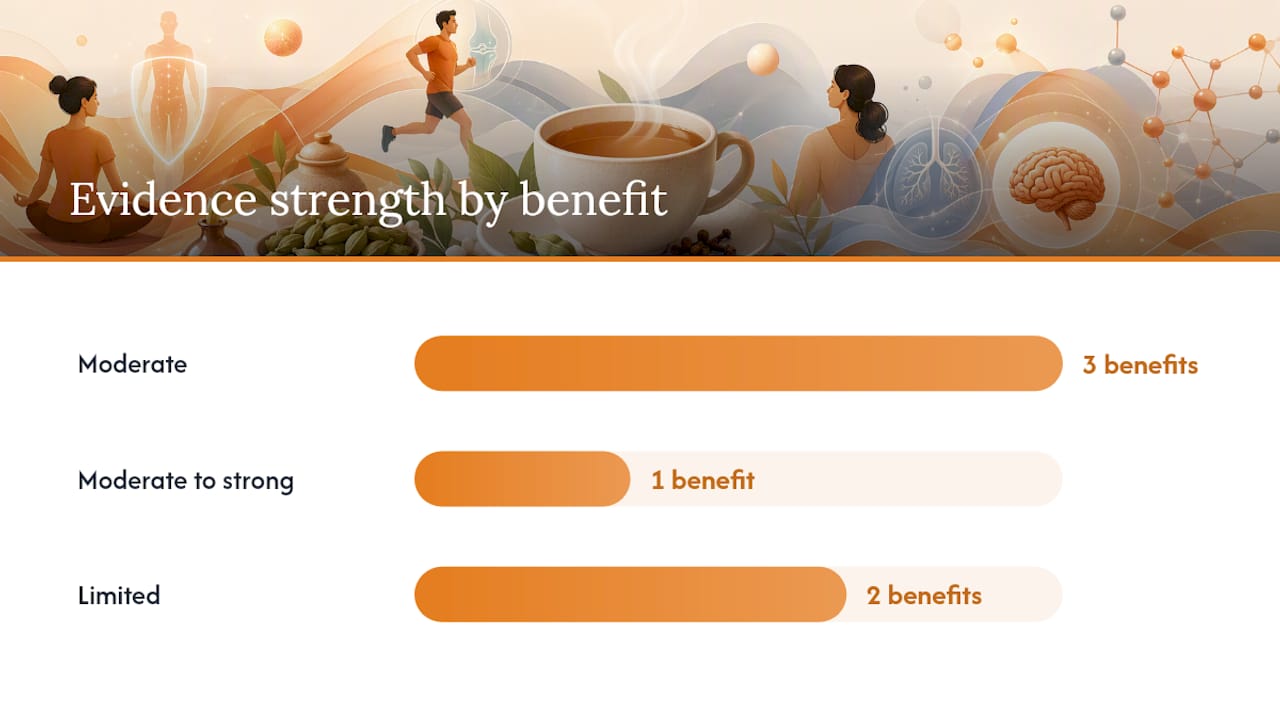
The honest summary, echoed across reputable health reviews, is that cardamom shows promising properties for inflammation and lipid markers, but the evidence remains limited and inconsistent. Treat it as a smart, complementary addition to your diet, not a replacement for medical treatment or medication.
Why Cardamom Chai Earned a Place in Our Cup
Cardamom chai isn’t a trend Dropoutchaiwala jumped on. It’s a drink rooted in generations of Indian tea culture, where cardamom wasn’t added for novelty but because it made people feel better after a meal and kept conversations going a little longer over a shared cup. That heritage shaped how we think about sourcing: fresh, high-quality green cardamom, not a diluted flavoring, is non-negotiable in our blends, because the difference between real cardamom and an artificial approximation shows up immediately on the palate and, we’d argue, in the actual bioactive content of what you’re drinking. We built our premix line so people don’t have to choose between convenience and quality on a rushed weekday morning. None of that changes the basic fact that cardamom chai is a wellness complement, not a clinical treatment, and anyone managing a health condition should still loop in their doctor before making it a daily ritual.
Try Dropoutchaiwala’s Cardamom Chai Premix
If everything above has you wanting a cup right now, you don’t need a stovetop and a strainer to get one. Dropoutchaiwala’s cardamom chai premix is built around real, fresh cardamom rather than artificial flavoring, so the same aromatic oils and digestive benefits discussed above are actually present in the cup, not just implied by the packaging.

The blend keeps the spice profile balanced instead of letting cardamom overpower the tea base, which matters if you’re drinking it daily rather than as an occasional treat. You can order online or pick it up in person at our retail locations, so whether you’re stocking your kitchen or grabbing a cup on your way somewhere, the process stays simple. If you’re new to cardamom chai, start with a smaller pack or the Chai Lovers Bundle before committing to a larger order, and follow the one to three cups a day guidance covered earlier so you get a feel for how your body responds. Explore our full premix range and find the cup that fits your routine.
Sources
- Chai Tea: Is It Good for You? Pros and Cons, Nutrition Information, and More
- Cardamom Masala Chai Recipe: Authentic Spiced Tea
