

Masala chai starts with five spices: cardamom, cinnamon, ginger, cloves, and black pepper. That’s the entire core list. Get those five right, and you have an authentic cup every time.
- Cardamom — the defining aromatic; floral, bright, and irreplaceable
- Cinnamon — warm sweetness that rounds the blend
- Ginger — the heat engine; fresh root gives the most vibrant kick
- Cloves — deep, almost smoky intensity (use sparingly)
- Black pepper — a sharp edge that keeps the cup from turning cloying
Read on for optional regional spices, a tested dry-mix recipe with ratios, brewing steps, and storage tips that keep your blend tasting fresh for months.
Key Takeaways
Cardamom, cinnamon, ginger, cloves, and black pepper are the five core chai spices; master those five, store your mix properly, and every cup will taste authentic.
| Point | Details |
|---|---|
| Five core spices | Cardamom, cinnamon, ginger, cloves, and black pepper form the complete authentic base. |
| Start small and balance | Change one spice at a time; cloves and pepper dominate quickly, so measure conservatively. |
| Toast before grinding | Dry-roast whole spices for 1–3 minutes on low heat to release essential oils before grinding. |
| Store correctly | Keep ground masala in an airtight jar away from heat; expect peak aroma for roughly 120 days. |
| Premix is a valid shortcut | A clean-label premix with named whole spices delivers authentic flavor without the prep work. |
Table of Contents
- The chai spices list: what each core spice actually does
- Optional and regional spices worth knowing
- Simple homemade chai spice mix: ratios and two quick recipes
- Whole vs ground spices, substitutions, and when to use fresh ginger
- How to brew masala chai with your spice mix
- Storage best practices and realistic shelf life
- Common chai mistakes and how to fix them
- Premixed chai blends vs homemade: what to look for
- The real value of starting simple
- Sources
The chai spices list: what each core spice actually does
Understanding why each spice belongs in the cup makes it much easier to balance your blend, whether you’re grinding from scratch or adjusting a premix.
Cardamom
Cardamom is the soul of masala chai. Its flavor is floral, slightly citrusy, and unmistakably warm. No other spice in the blend does what it does, which is why most experienced chai makers use it in the largest proportion. For the best aroma, crack whole green pods lightly with the flat of a knife before adding them to the pot. Ground cardamom works in a dry premix, but it loses potency faster than any other spice in the blend.
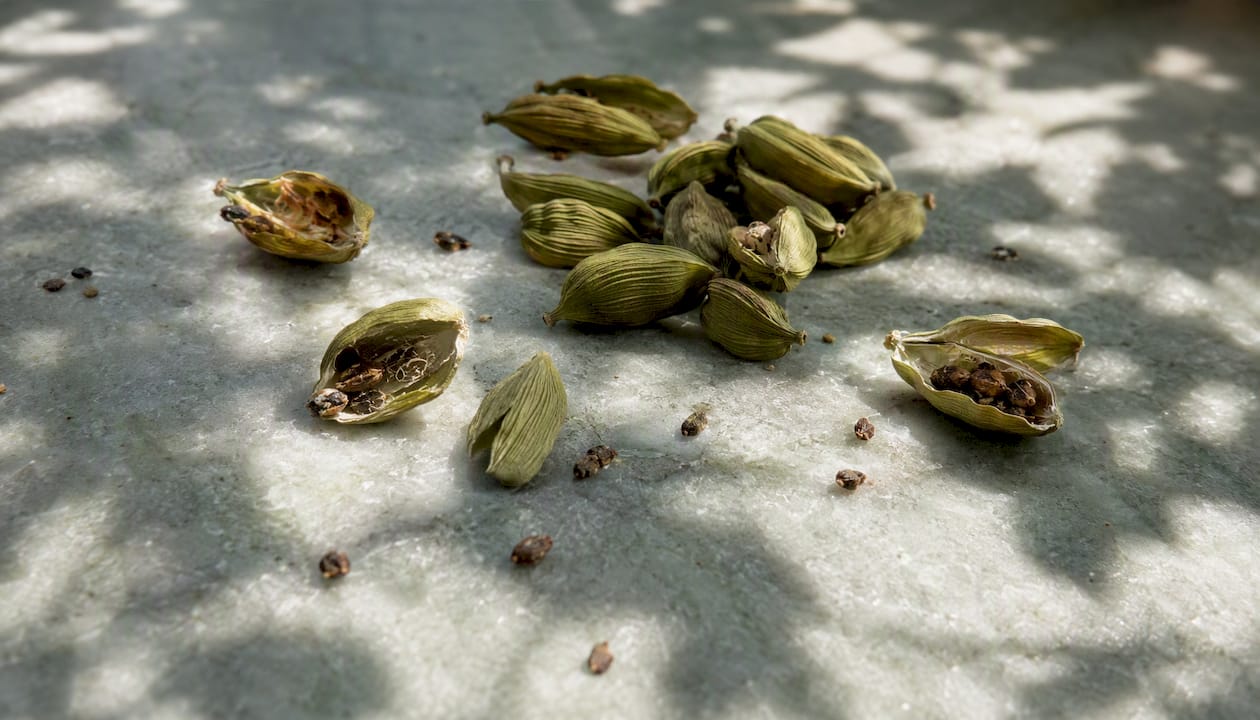
Pro Tip: Crack pods rather than grinding them for stovetop chai. The whole pod releases aroma slowly into the simmering milk, giving a cleaner, more complex flavor than pre-ground powder.
Cinnamon
Cinnamon adds the warm, sweet backbone that holds the other spices together. Ceylon cinnamon (also called “true cinnamon”) delivers a delicate, nuanced sweetness; cassia, the bolder variety sold in most supermarkets, can easily overpower cardamom’s subtlety if you use too much. A half-inch to three-quarter-inch piece per cup is a practical starting point for stovetop chai.
Ginger
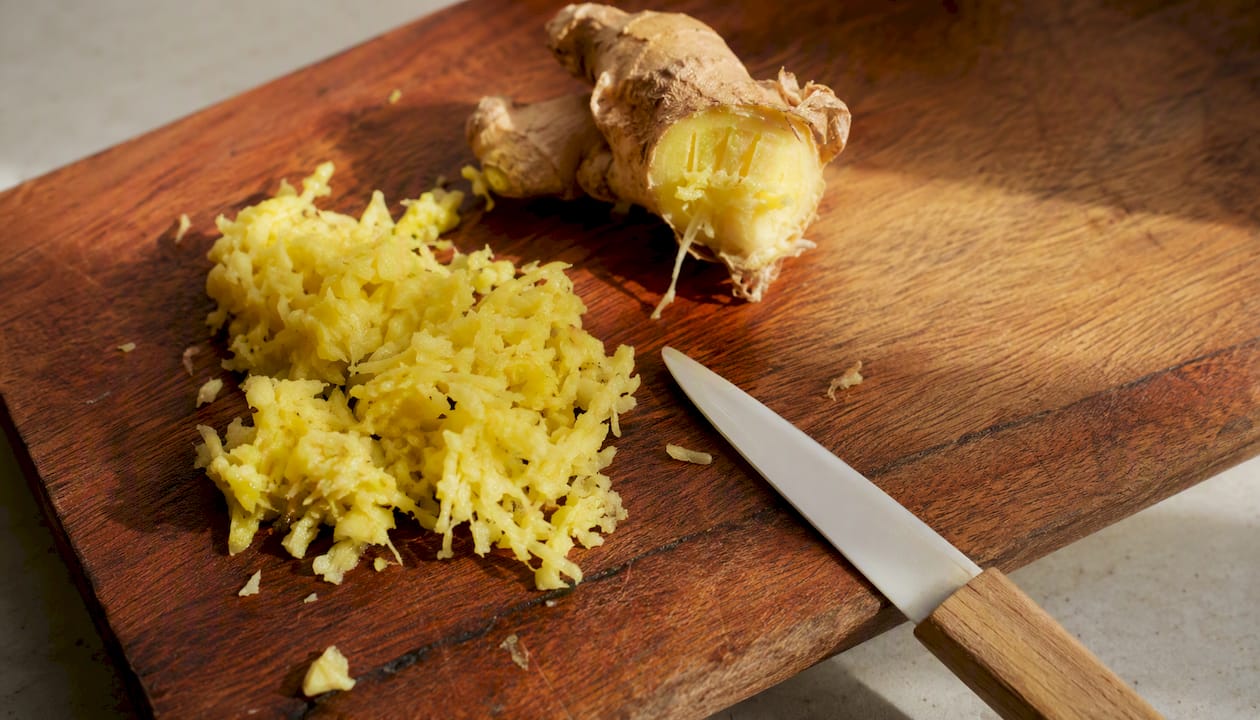
Ginger is the heat source, and fresh ginger gives a noticeably brighter, more vibrant heat than ground powder, which tastes comparatively flat. Grate or crush a small knob of fresh root directly into the pot. If fresh isn’t available, frozen grated ginger is a close second. Ground ginger works in a dry premix but use slightly less, since its heat is more concentrated and less aromatic.
Cloves
Cloves are the most potent spice in the blend by volume. Two to three whole cloves per cup is typically enough; go beyond that and the tea turns medicinal and sharp. In a dry premix, cloves are the spice most likely to dominate if over-measured, so treat them as a seasoning rather than a base note.
Black pepper
Black pepper is subtle but essential for balance. A small amount, two peppercorns or a pinch of ground pepper per cup, adds a sharpness that prevents the warm, sweet spices from making the cup feel one-dimensional. Think of it as the spice that keeps everything else honest.
Optional and regional spices worth knowing
The five core spices are enough for a great cup, but chai has always been a regional, personal thing. These secondary spices expand the profile without muddying it, as long as you use them sparingly.
- Fennel seed — adds a mild anise sweetness; softens the blend and makes it more approachable for people who find cloves too sharp
- Star anise — deeper, more assertive licorice note; one small pod per pot is plenty
- Nutmeg — a tiny pinch adds warmth and a faint nuttiness; easy to overdo
- Saffron — used in Kashmiri chai, which is brewed with green tea rather than black and has a savory, lightly floral character
- Tulsi (holy basil) — earthy and slightly peppery; common in Ayurvedic-influenced blends
- Rose petals — delicate floral note; pairs especially well with cardamom-forward blends
- Lemongrass — bright, citrusy lift; popular in Maharashtrian chai alongside extra ginger
- Allspice — a useful substitute when cloves are unavailable; slightly milder and less sharp
Regional notes worth keeping in mind: Maharashtrian chai often skips cloves and black pepper entirely, leaning on lemongrass and crushed ginger for its character. Kashmiri chai swaps black tea for green tea and adds saffron, producing a pink-hued, savory cup that barely resembles the spiced milk tea most people picture. South Indian chai tends to be simpler, heavier on ginger and cardamom. Middle Eastern variations sometimes include cardamom alone, brewed strong and served without milk.
As Gimme Some Oven notes, there is no single correct recipe. Increase ginger for more intensity, add fennel for a softer finish. The core five give you the foundation; the optional spices let you make it yours.
Simple homemade chai spice mix: ratios and two quick recipes
Dry premix ratio (makes roughly ½ cup)
This base ratio from Nature’s Herbal Remedy is a reliable starting point:
| Spice | Amount |
|---|---|
| Ground cinnamon | 2 tablespoons |
| Ground cardamom | 1 tablespoon |
| Ground ginger | 1 tablespoon |
| Ground cloves | ½ tablespoon |
| Ground black pepper | ½ tablespoon |
Scale up proportionally for a larger batch. To double it, simply double every measurement. For a full cup (roughly 1 cup of dry mix), multiply each by four.
Before grinding: dry-roast whole cardamom, cloves, and peppercorns on low heat for 1–3 minutes until fragrant. This releases the essential oils locked inside the pods and seeds, producing a noticeably more potent powder than grinding raw spices.
- Toast in a dry pan over low heat, stirring constantly
- Pull off heat the moment you smell the aroma lift
- Let cool completely before grinding
- Grind cloves and pepper last; over-grinding cloves turns the mix bitter
Batch sizing tip: make no more than a 2–3 week supply at a time if you’re grinding fresh. A larger batch is fine if you store it correctly (see the storage section below).
Recipe A: Quick stovetop masala chai (1 cup)
- Bring ½ cup water to a simmer in a small saucepan.
- Add 1 teaspoon of your dry masala mix (or 4 cracked cardamom pods, 2–3 cloves, a ½-inch cinnamon piece, 2 peppercorns, and a small knob of grated ginger per Swasthi’s Recipes).
- Simmer the spices in water for 2 minutes.
- Add 1 teaspoon of strong black tea leaves (Assam works best).
- Pour in ½ cup whole milk.
- Bring to a gentle boil, then reduce heat and simmer for 2–3 minutes.
- Strain into a cup, sweeten to taste, and serve immediately.
Recipe B: Make-ahead dry premix (pantry batch)
Use the ratio table above. Store in an airtight glass jar. Use ¾–1 teaspoon per cup when brewing. A ½-cup batch yields roughly 24–32 cups of chai, which is a practical amount to make at once without risking staleness.
Whole vs ground spices, substitutions, and when to use fresh ginger
The form you choose changes the flavor more than most people expect.
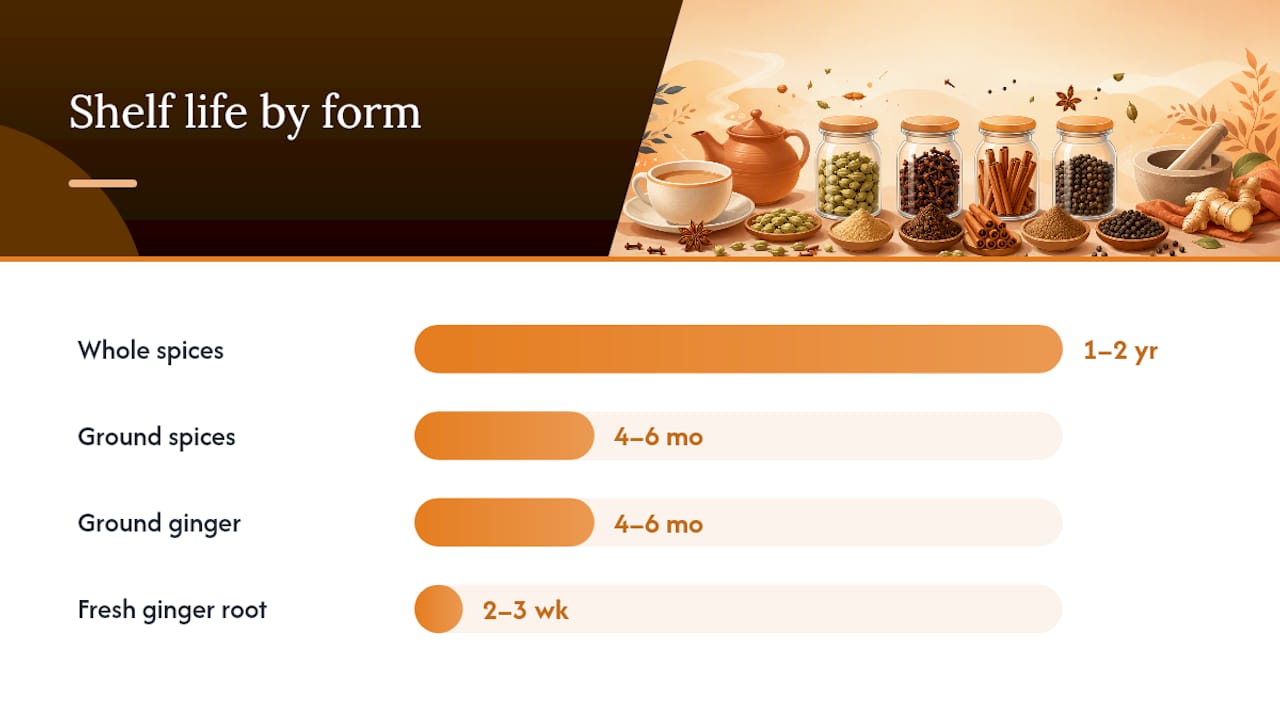
| Form | Best for | Shelf life | Notes |
|---|---|---|---|
| Whole spices | Stovetop brewing, toasting before grinding | 1–2 years | Retain aroma longest; crack or crush before use |
| Ground spices | Dry premix, quick brewing | 4–6 months | Convenient; lose potency faster |
| Fresh ginger root | Stovetop chai | 2–3 weeks refrigerated | Brightest heat; freeze grated for longer storage |
| Ground ginger | Dry premix | 4–6 months | Use slightly less than fresh; heat is more concentrated |
Substitution guide:
| Original | Substitute | Ratio adjustment |
|---|---|---|
| Ceylon cinnamon | Cassia cinnamon | Use less; cassia is significantly bolder |
| Fresh ginger | Ground ginger | Use ½ teaspoon ground per 1-inch fresh knob |
| Whole cloves | Allspice berries | Use equal amounts; slightly milder |
| Green cardamom pods | Ground cardamom | ½ teaspoon ground per 6 pods |
| Black peppercorns | Ground black pepper | ¼ teaspoon ground per 6 peppercorns |
Pro Tip: Roast whole cardamom pods in a dry pan until they just start to puff, then crack them open before grinding. The difference in aroma compared to grinding raw pods is immediately noticeable. If fresh ginger is unavailable, frozen grated ginger thaws in seconds and performs almost as well as fresh.
How to brew masala chai with your spice mix
Stovetop method (the standard approach)
- Combine ½ cup cold water and ½ cup milk in a small saucepan.
- Add spices first: either 1 teaspoon of dry premix or whole spices as listed above.
- Bring to a low boil over medium heat, stirring occasionally.
- Add 1 heaped teaspoon of strong black tea leaves, preferably Assam, which holds up to milk and spice without turning thin.
- Reduce heat and simmer for 3–4 minutes. The longer it simmers, the stronger the spice flavor.
- Strain through a fine mesh strainer into your cup.
- Sweeten with sugar, jaggery, or honey to taste.
Measurements per cup: 1 teaspoon dry premix, 1 heaped teaspoon tea leaves, ½ cup water, ½ cup milk. For a small batch of four cups, scale each ingredient by four and use a medium saucepan.
Variations worth trying
- Vegan milk options: oat milk and full-fat coconut milk both hold up well to simmering. Almond milk tends to separate at high heat, so add it off the heat and stir.
- Chai concentrate: use double the spices and tea, simmer for 6–8 minutes, strain, and refrigerate. Mix 1:1 with hot or cold milk when ready to drink. Keeps for up to 5 days in the fridge.
- Cold-brew chai: steep spices and tea leaves in cold water overnight in the fridge, then strain and mix with cold milk. For a detailed method, Dropoutchaiwala’s cold brew guide walks through both cold-brew and concentrate approaches.
- Caffeine-free version: swap black tea for rooibos or a caffeine-free herbal base. The spices work just as well.
Storage best practices and realistic shelf life
How you store your chai masala matters as much as how you make it.
- Store in an airtight glass jar with a tight-fitting lid. Metal tins work too; avoid plastic, which absorbs odors.
- Keep the jar in a cool, dark cupboard, away from the stove. Heat and steam from cooking accelerate aroma loss faster than almost anything else.
- Avoid humidity. Never store spices above the kettle or near a sink.
- Label the jar with the date you made it.
Shelf life in practice: a homemade ground masala mix keeps for roughly 120 days in an airtight container at room temperature before the volatile oils noticeably fade. Whole-spice premixes last longer because the oils stay trapped inside the pods and seeds until you grind them. Refrigerating a ground mix can extend that window to around 6 months, though condensation from opening a cold jar is a real risk.
How to test if your mix is stale: open the jar and smell it directly. A fresh masala smells sharp, floral, and warm. A stale one smells flat or dusty. If you can’t detect cardamom or ginger clearly, the mix has lost its punch. Make a small fresh batch rather than using a tired one.
Common chai mistakes and how to fix them
| Symptom | Probable cause | Quick fix |
|---|---|---|
| Medicinal, sharp bitterness | Too many cloves or too much pepper | Dilute with extra milk; balance with a pinch of sugar |
| Flat, dull flavor | Stale spices or ground mix past 120 days | Make a fresh batch; add a cracked cardamom pod to the pot |
| Overpowering sweetness | Too much cinnamon or fennel | Add a pinch of black pepper and a small knob of fresh ginger |
| Watery, thin cup | Too much water, too little tea | Use equal parts water and milk; increase tea leaves |
| No aroma | Spices added too late or not simmered | Add spices to cold water before heating; simmer at least 2 minutes before adding tea |
- Too much clove: the most common beginner mistake. Cloves amplify quickly during simmering. Start with two whole cloves per cup and increase only after tasting.
- Over-simmering: simmering beyond 5–6 minutes can make the tea bitter and the milk slightly grainy. Watch the pot.
- Stale spices: no amount of technique fixes a flat premix. Fresh spices are the single biggest lever for a great cup.
- On-the-spot rescue: if a cup tastes too sharp or medicinal, stir in a little extra warm milk and a pinch of sugar. Adding a freshly cracked cardamom pod and letting it steep for 30 seconds can also lift the aroma back up.
Premixed chai blends vs homemade: what to look for
Convenience and freshness pull in opposite directions, but a well-made premix can close that gap significantly.
- Convenience: a premix eliminates measuring, grinding, and toasting. For busy mornings, that’s a genuine advantage.
- Freshness trade-off: a premix ground months ago will always be slightly less aromatic than a freshly made batch. The gap narrows when the premix uses whole or coarsely ground spices rather than fine powder.
- What to check on the label: look for named whole spices (cardamom, cinnamon, ginger, cloves, pepper) rather than vague “natural flavoring” entries. Check for added sugar or fillers; a clean premix needs neither. A short ingredient list is usually a good sign.
- Ingredient transparency matters in specialty beverages generally, as Lucent’s ingredient guide illustrates for matcha. The same principle applies to chai: the closer the label reads to a spice rack, the better.
Dropoutchaiwala’s masala, ginger, and cardamom premix pouches are built around traditional spice blends with no unnecessary fillers. They’re a practical option when you want an authentic cup without the prep. Browse the full chai premix range to find the flavor profile that fits your taste.
The real value of starting simple
There’s a temptation, once you know the full chai spices list, to use all of them at once. Resist it. The five-core approach works because each spice has a clear role, and when every role is filled, the cup is complete. Adding six optional spices on top doesn’t make it richer; it makes it muddy.
The most satisfying chai experiments come from changing one thing at a time. Swap cassia for Ceylon cinnamon and taste the difference. Try fresh ginger one week and frozen the next. Add a single fennel seed to a pot and see whether you like the softness it brings. Keep a small notebook, even just a note on your phone, and record what you changed and whether it worked. That’s how a household signature blend develops.
On days when there’s no time for any of that, a good premix is not a compromise. It’s a practical tool. The goal is a great cup of chai, and the path to that cup is whatever works for you today.
Sources
- Masala Chai Masterclass: 10 Easy Recipes, Spices, Ratios, & More - Masala Monk
- Masala Chai - Gimme Some Oven
- Chai spice - Indian Healthy Recipes
