

Indian chai and British tea share the same plant but arrive in your cup through completely different journeys. The short version: Indian chai is a spiced, boiled milk tea built on robust leaves, most often Assam-grown, while British tea is a steeped black-tea tradition that favors blended or single-origin leaves served with milk added separately, or sometimes neat. Both traditions trace back to the same colonial-era trade networks, yet they diverged into two distinct drinking cultures that taste, smell, and feel nothing alike.
Here is what separates them at a glance:
- Ingredients: Chai combines tea leaves, whole milk, sugar, and spices (cardamom, ginger, cinnamon). British tea uses tea leaves and water, with milk and sugar optional and added after steeping.
- Brewing method: Chai is simmered or boiled on the stove; British tea is steeped in a pot or mug, then strained.
- Leaf types: Chai typically uses CTC-processed Assam for body and strength; British blends like English Breakfast often include Assam too, but in orthodox-processed form, while Darjeeling is prized for delicate, aromatic cups.
- Flavor: Chai is spicy, sweet, and full-bodied. British tea tends toward malty, brisk, or floral depending on the blend.
- Cultural role: Chai is daily social currency at Indian street stalls and homes; British tea is a ritualized household and hospitality practice.
According to Indian tea culture, India is one of the world’s major tea producers and consumers, with Assam and Darjeeling as its two most recognized origins, and most domestic consumption happens with milk and sugar already in the cup.
Key Takeaways
Indian chai and British tea diverge most sharply at the brewing stage: boiling with milk and spices versus steeping in water, a difference that drives every flavor, cultural, and nutritional distinction between the two traditions.
| Point | Details |
|---|---|
| Core preparation difference | Chai is boiled with milk and spices; British tea is steeped in water, with milk added separately. |
| Leaf and processing | CTC Assam gives chai its strength; orthodox Darjeeling and English Breakfast blends define British tea. |
| Flavor drivers | Cardamom, ginger, and cinnamon shape chai; malt, briskness, or bergamot define British blends. |
| Health outcome | Neither is inherently healthier; sugar and milk quantity determine the nutritional difference. |
| Try it in Melbourne | Dropout Chaiwala at Southern Cross and Flinders Street is the best chai cafe in Melbourne for an authentic, freshly brewed cup or a premix pack to take home. |
Table of Contents
- How do Indian chai and British tea compare side by side?
- Where did Indian chai and British tea actually come from?
- What tea plants and processing methods explain the flavor differences?
- How do spices and milk shape the flavor of chai vs. British tea?
- How do you brew authentic chai and British tea at home?
- How does each tea fit into daily life and social culture?
- Is chai or British tea healthier?
- How to taste and pair chai and British tea side by side
- Where can you try or buy authentic chai in Australia?
- Why both traditions deserve your curiosity
- Authentic Indian chai premix, ready when you are
- Sources
How do Indian chai and British tea compare side by side?
The table below maps the core dimensions so you can see the differences at a glance.
| Dimension | Indian Chai | British Tea |
|---|---|---|
| Ingredients | Tea leaves, whole milk, sugar, spices | Tea leaves, water; milk and sugar optional |
| Brewing method | Simmered or boiled on stove | Steeped in pot or mug, then strained |
| Typical leaf/processing | CTC Assam (robust, granular) | Orthodox Assam, Darjeeling, or blended |
| Flavor profile | Spicy, sweet, full-bodied, warming | Malty, brisk, floral, or aromatic |
| Cultural occasion | Street stalls, daily home ritual, hospitality | Afternoon tea, household breaks, formal service |
| Common servingware | Small clay cups (kulhad) or glass | Teapot, porcelain cup and saucer |
| Caffeine/nutrition | Moderate caffeine; higher sugar and milk calories | Moderate caffeine; lower sugar/milk if taken black |
A few things stand out from that comparison. First, the brewing method is the single biggest driver of flavor difference, not the leaf itself. Second, spices in chai do real flavor work, not just aromatic decoration. Third, the servingware tells you something about pace: a kulhad is meant to be drained quickly; a porcelain cup and saucer invites you to linger.
Where did Indian chai and British tea actually come from?
The origin story is messier and more interesting than most people expect. Tea did not arrive in Britain from a pristine garden tradition. It arrived as a commodity, and the colonial plantation economy that built the large-scale Indian tea industry shaped both what the British drank and what Indians eventually made their own.
Key milestones in the timeline:
- Pre-colonial India: Indigenous Assamese communities used tea leaves medicinally long before commercial cultivation began.
- 1820s onward: Commercial tea production expanded under the British East India Company, with organized plantations in Assam from the 1820s and English tea gardens established through the 1830s.
- 19th-century Britain: Tea became a mass-market product in Britain, blended for consistency and marketed to every social class. English Breakfast and Earl Grey emerged as named blends with distinct identities.
- Early 20th century India: The Indian Tea Market Expansion Board ran organized advertising campaigns to normalize tea drinking across Indian social classes, turning it into a daily habit rather than an elite or colonial import.
- Masala chai’s rise: As tea became widely available and affordable, Indian households began boiling it with milk, sugar, and spices already used in Ayurvedic cooking, creating the preparation style now known globally as masala chai.
Archival research documents this shift from imperial commodity to national cultural object across the 19th and 20th centuries in India. The British and Indian traditions share the same raw material but diverged because of who was doing the brewing, what was available in the kitchen, and what the drink needed to do socially.
What tea plants and processing methods explain the flavor differences?
The same species, Camellia sinensis, produces both a malty Assam breakfast tea and a floral Darjeeling. What changes is the variety, the growing altitude, and crucially, how the leaf is processed after harvest.
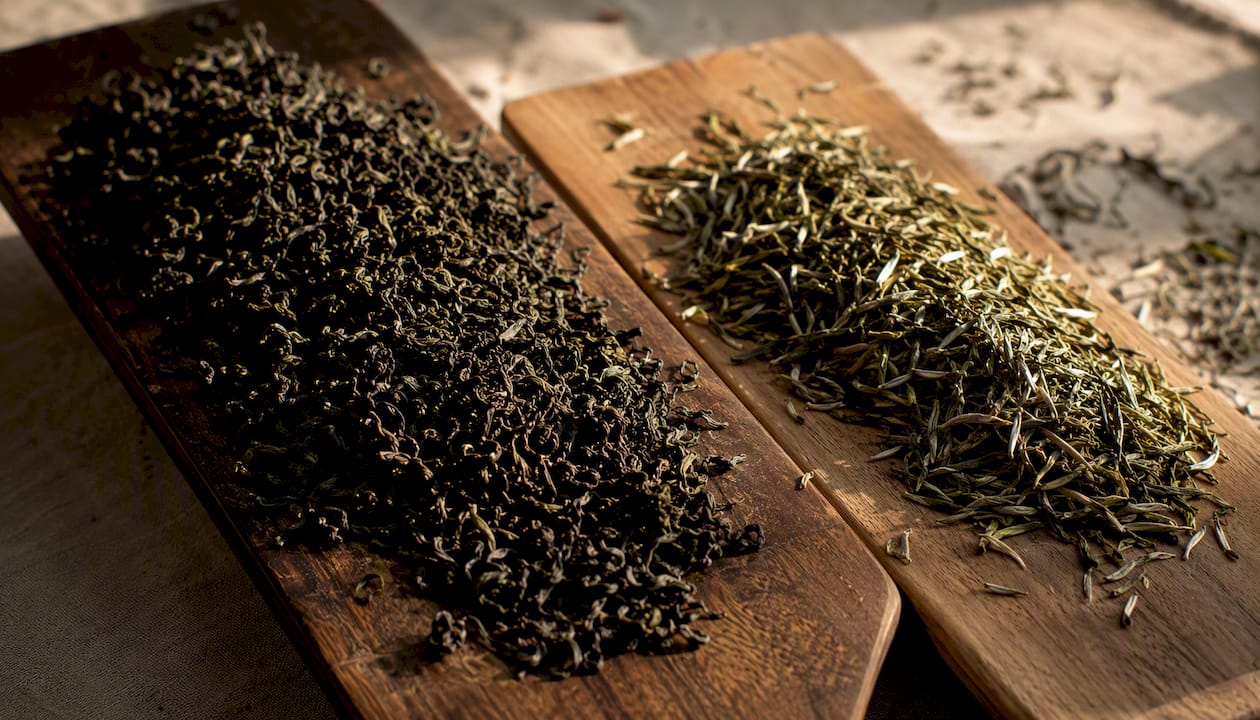
Assam grows at low elevation in northeast India. The variety (Camellia sinensis var. assamica) produces large, bold leaves with high tannin content. That translates to a malty, full-bodied cup that holds up well to milk, which is exactly why Assam is the standard base for masala chai and for English Breakfast blends.
Darjeeling grows at high altitude in West Bengal. The leaves are smaller, more delicate, and often processed using the orthodox whole-leaf method. The result is a lighter, aromatic cup, sometimes described as having a muscatel (grape-like) character, particularly in the second flush harvest. Darjeeling is often best without milk, which puts it closer in experience to a fine Chinese green or oolong than to a builder’s brew.
CTC vs. orthodox processing is the other major variable. CTC (crush-tear-curl) breaks the leaf into small granules that release flavor quickly and intensely. It is the standard for chai bases and most commercial breakfast blends. Orthodox processing preserves the whole or large-cut leaf, releasing flavor more slowly and with greater complexity. That is why a Darjeeling steeped for three minutes tastes nothing like an Assam CTC boiled in milk for five.
English Breakfast is a blended black tea, typically combining Assam for body with Ceylon or Kenyan leaves for brightness. It is designed to be robust enough for milk and to taste consistent cup after cup. Earl Grey takes a base tea (often Ceylon or Darjeeling) and adds bergamot oil, a citrus extract that gives it its distinctive floral-citrus aroma. Neither is a single-origin tea; both are blended for a specific flavor target.
Masala chai is not a leaf type at all. It is a preparation method: a robust black tea (almost always CTC Assam) boiled with milk, water, sugar, and a spice blend. The spices vary by region and household, but cardamom and ginger are the most consistent.
Pro Tip: When buying loose-leaf tea for chai at home, look for CTC Assam specifically labeled “second flush” for a slightly smoother, less astringent base. For a British-style brew, try a first-flush Darjeeling from a retailer like Qahwat Al’Ard to taste the difference that altitude and processing make.
How do spices and milk shape the flavor of chai vs. British tea?
Chai tastes the way it does because of chemistry and method working together. Boiling tea leaves with milk, sugar, and spices extracts compounds differently than steeping in water alone. Milk proteins bind some of the tannins, softening bitterness. Boiling concentrates everything: the tea’s body, the spice volatiles, the sweetness.
The classic spice palette and what each contributes:
- Cardamom: The backbone of most masala chai blends. Adds a floral, slightly eucalyptus warmth that lifts the whole cup.
- Ginger: Brings heat and a sharp, clean bite. Fresh ginger is more pungent than dried; both work, but fresh ginger gives a brighter result.
- Cinnamon: Adds sweetness and a woody depth that rounds out sharper spices.
- Cloves: Intense and slightly medicinal. Used sparingly, they add complexity; overused, they dominate.
- Black pepper: The most underrated chai spice. A pinch adds a slow-building warmth that lingers on the finish.
Spice mixes vary by region and household, making chai a genuinely personal drink. Starting with cardamom and ginger, then adding black pepper or cinnamon to taste, is a practical way to find your own balance.
British tea’s flavor profile works differently. English Breakfast is built for briskness, a clean, slightly astringent quality that wakes up the palate. Darjeeling’s delicacy comes from its high-altitude growing conditions and orthodox processing, not from anything added to the cup. Earl Grey’s bergamot oil gives it an aromatic, almost perfumed quality that divides drinkers sharply.
The milk question matters here too. Adding milk to British tea after steeping (the standard approach) preserves more of the tea’s aromatic complexity. Boiling milk with the tea, as in chai, integrates everything into a single, unified flavor. Neither is wrong; they are just different goals.
How do you brew authentic chai and British tea at home?
For both recipes, the leaf choice matters before anything else. Use CTC Assam for chai; use Darjeeling or an English Breakfast blend for a British-style cup.
Classic masala chai (serves 2)
- Combine 1 cup water and 1 cup whole milk in a small saucepan over medium heat.
- Add 2 teaspoons CTC Assam tea (or one heaped teaspoon of a masala chai premix).
- Add spices: 3 cardamom pods (lightly crushed), a 1 cm piece of fresh ginger (sliced), a small cinnamon stick, and a pinch of black pepper.
- Bring to a gentle boil, then reduce heat and simmer for 3 to 5 minutes, stirring occasionally.
- Add 1 to 2 teaspoons of sugar (adjust to taste).
- Strain through a fine mesh strainer into cups and serve immediately.
British-style brew (serves 2)
- Boil fresh, filtered water and let it cool for 30 seconds (around 95°C / 203°F).
- Warm the teapot by swirling a little hot water in it, then discard.
- Add 2 teaspoons of loose-leaf English Breakfast or Darjeeling (or 2 tea bags).
- Pour 400 ml of hot water over the leaves.
- Steep for 3 to 4 minutes for English Breakfast; 2 to 3 minutes for Darjeeling.
- Strain and pour. Add milk and sugar after pouring, to taste.
Pro Tip: Australians using full-cream dairy milk will get the richest chai, but oat milk is a genuinely good substitute — its natural sweetness complements cardamom well. For British-style tea, avoid boiling water directly on Darjeeling leaves; the slight temperature drop preserves the floral notes that make it worth drinking.
For a no-cook alternative, cold brew chai works surprisingly well with a premix: steep overnight in cold milk in the fridge for a smooth, low-bitterness result.
How does each tea fit into daily life and social culture?
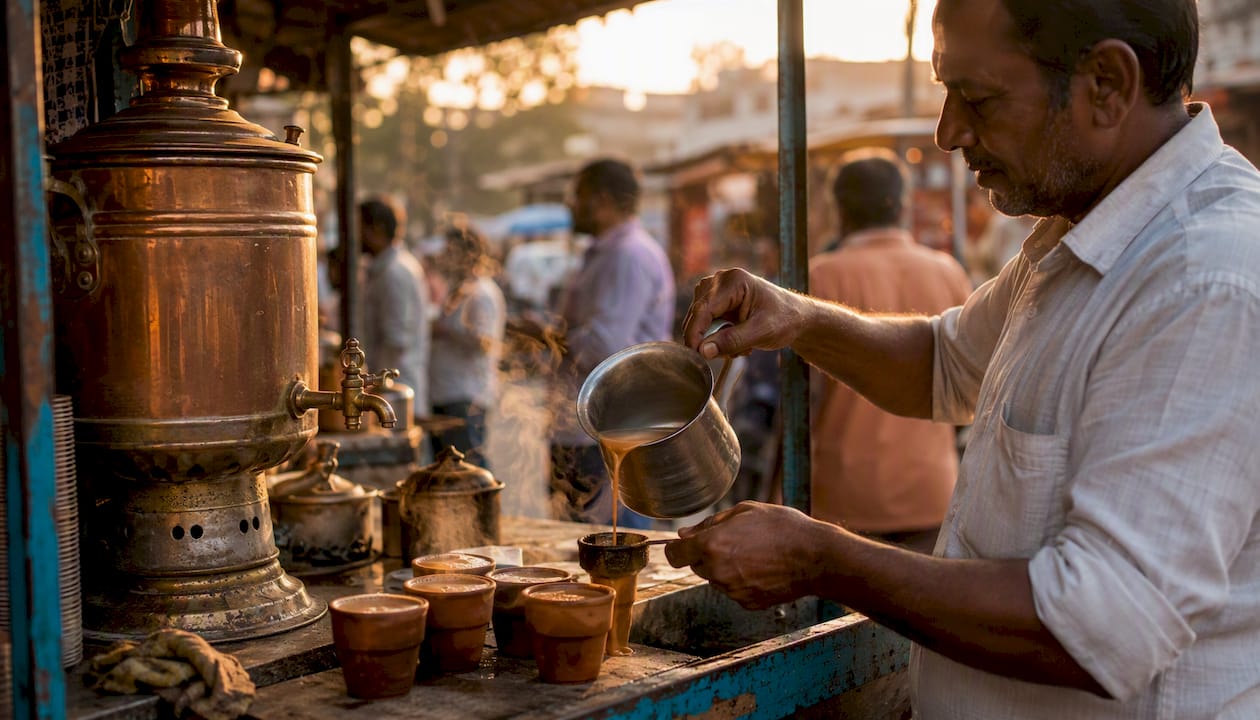
Chai is social infrastructure in India. The tapri (roadside chai stall) is where deals get made, arguments get settled, and strangers become acquaintances over a two-rupee cup. Railway station chai, served in clay kulhads, is practically a national institution. At home, offering chai to a guest is not optional; it is the first act of hospitality, regardless of the time of day.
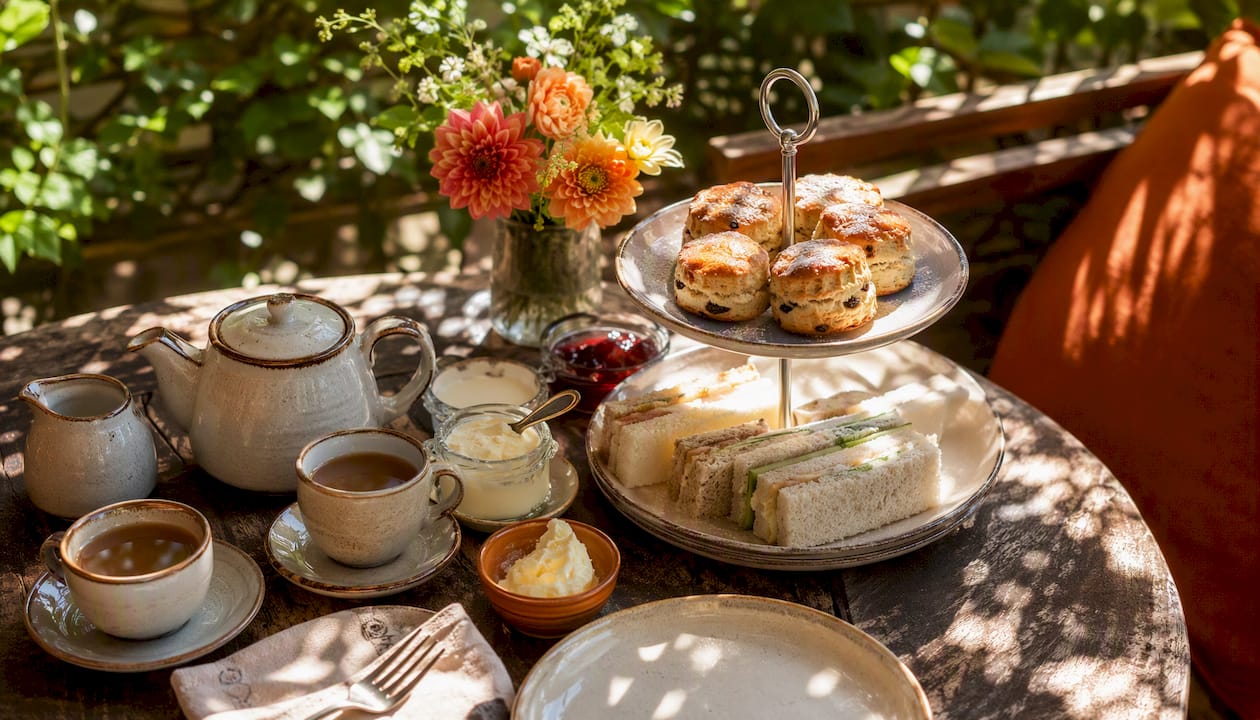
British tea operates on a different register. “Put the kettle on” is less an invitation and more a reflex response to any situation requiring calm, comfort, or a pause. Afternoon tea, with its scones, clotted cream, and finger sandwiches, is a formalized ritual that dates to the 19th century and still functions as a social occasion in its own right. The household tea break is quieter, more personal, and often solitary.
| Cultural dimension | Indian chai | British tea |
|---|---|---|
| Primary setting | Street stalls, home kitchen, office | Home kitchen, café, formal tearoom |
| Social function | Daily hospitality, community bonding | Comfort ritual, formal occasion |
| Pace | Quick, intense, often standing | Leisurely, seated, often with food |
| Typical accompaniment | Samosas, biscuits, pakoras | Scones, biscuits, sandwiches |
There is also a physiological dimension to chai’s year-round popularity in India’s hot climate. Research cited by NPR suggests that hot drinks can trigger a sweating response that ultimately cools the body, which helps explain why a steaming cup of chai remains appealing even in 40°C heat.
In Australia, the tea culture story is evolving fast. Indian diaspora communities have brought chai culture to Melbourne, Sydney, and Brisbane, and cafés serving authentic spiced chai have become a genuine part of the urban food scene. Dropout Chaiwala, Australia’s first Indian chai cafe operating on a QSR model, is a direct expression of that shift.
Is chai or British tea healthier?
Neither is inherently healthier. The outcome depends almost entirely on how much sugar and milk you add and how large your serving is.
- Caffeine: A standard cup of black tea contains roughly 40–70 mg of caffeine. Chai made with a strong Assam base and boiled for several minutes can sit at the higher end of that range; a lightly steeped Darjeeling will be at the lower end.
- Sugar: This is where chai often tips the nutritional balance. A traditional street chai can contain 2 to 3 teaspoons of sugar per small cup. A British cup taken black with no sugar has essentially zero added sugar.
- Milk: Full-cream milk adds calories and saturated fat. Using lower-fat milk or oat milk in chai reduces the calorie load without dramatically changing the flavor.
- Spice benefits: Ginger and cardamom, both core chai spices, have documented associations with digestive support and anti-inflammatory properties in traditional medicine, though the amounts in a single cup are modest.
The practical takeaway: a chai made with less sugar and lower-fat milk is a genuinely nutritious drink. A British cup taken black is one of the lowest-calorie hot beverages you can drink. Both contain antioxidants from the tea itself. The difference is in what you add, not in the leaf.
Pro Tip: To cut sugar in chai without losing sweetness, reduce the boil time slightly and add a small piece of cinnamon. Cinnamon reads as sweet on the palate even when no sugar is present.
How to taste and pair chai and British tea side by side
A simple tasting checklist makes the comparison concrete:
- Look: Chai should be a warm amber-brown, opaque from the milk. British tea ranges from pale gold (Darjeeling) to deep copper (English Breakfast).
- Aroma: Lean in before you sip. Chai should hit you with cardamom and ginger first. British tea should smell malty (Assam), floral (Darjeeling), or citrus-forward (Earl Grey).
- First sip: Notice the body. Chai coats the mouth; British tea is cleaner and more immediate.
- Mid-palate: Chai’s spice heat builds here. British tea’s astringency or briskness shows up mid-sip.
- Finish: Chai lingers with warmth and sweetness. Darjeeling finishes clean and slightly dry; English Breakfast finishes with a malty note.
Food pairings that highlight the differences:
- Chai: Samosas, pakoras, spiced biscuits, or anything with a savory, fried quality. The spice in the chai mirrors and amplifies the food’s flavor.
- British tea: Shortbread, scones with jam, cucumber sandwiches, or plain digestive biscuits. The tea’s briskness cuts through butter and cream.
Pro Tip: Pair an Assam-based chai against a neat Darjeeling in the same sitting. You will taste how the same country produces both the boldest milk tea and the most delicate black tea on the planet, which is a more useful lesson than any flavor description.
Where can you try or buy authentic chai in Australia?
Authentic chai is genuinely available across Australian cities, and the options have improved significantly as Indian food culture has taken root. For anyone looking for the best chai in Australia, the gap between a good cup and a mediocre one usually comes down to the base tea, the spice quality, and whether the chai is actually brewed or just poured from a syrup.
Dropout Chaiwala operates retail QSR outlets at Southern Cross Station and Flinders Street Station in Melbourne, making it easy to grab an authentic cup on the go. Their premix packs (masala, ginger, cardamom, and classic) are also available online for home brewing.
How to spot the best chai cafe in Melbourne:
- Fresh or whole spices used in the brew (not a pre-made syrup)
- CTC Assam or a named Indian tea as the base
- Chai brewed to order, not sitting in a urn
- Option to adjust milk ratio and spice level
- A menu that shows some knowledge of Indian tea traditions
For a masala chai premix to try at home, look for packs that list individual spices rather than a generic “spice blend” on the label. Transparency in the ingredient list is usually a reliable quality signal.
Why both traditions deserve your curiosity
Both chai and British tea are worth understanding on their own terms, not ranked against each other. The instinct to declare one “better” misses the point. Chai is a complete sensory experience built for warmth, community, and intensity. British tea is built for clarity, ritual, and restraint. They solve different problems beautifully.
What is underappreciated in most tea comparisons is how much the social context shapes the taste. A chai drunk standing at a Mumbai railway platform at 6 AM tastes different from the same recipe made at home on a Sunday morning, not because the recipe changed, but because the experience did. The same is true for a British afternoon tea: the ritual is half the flavor.
For Australians, the opportunity is to hold both traditions at once. The country’s multicultural food culture is genuinely well-suited to that. You can have a Darjeeling at a tearoom in the afternoon and a masala chai at Dropout Chaiwala’s Flinders Street outlet on the way home. Neither cancels the other out.
Authentic Indian chai premix, ready when you are

Dropout Chaiwala brings India’s street chai culture to Australia without the compromise. As Australia’s first Indian chai cafe operating on a QSR model, Dropout Chaiwala offers premix chai packs built on traditional spice blends with ginger and cardamom at the center, so every cup tastes like it was made with intention, not convenience.
- Masala Chai pouch: the full-spice classic, built on a robust Assam base with cardamom, ginger, and warming spices
- Cardamom Chai pouch: a cleaner, floral profile for those who want spice without the heat
- Ginger Chai pouch: sharp, bright, and genuinely warming
Order online at Dropoutchaiwala for home delivery or pickup, or visit the Southern Cross and Flinders Street Station outlets in Melbourne to try a freshly brewed cup first.
Sources
- Indian tea culture
- History of Indian Tea
- Nationalizing the consumption of tea for the Hindi reader: the Indian tea market-expansion board’s advertisement campaign — Cambridge Core
- Empires of the Garden — Duke University Press
- Cool down with a hot drink — NPR
