

A vacuum flask is the most reliable way to keep chai hot for a single serve on the go, while a double-wall insulated airpot handles multi-cup service, and a mug warmer with a fitted lid solves the desk problem. Pair any of these with a quality premix like Dropoutchaiwala’s masala chai pouch for fast, consistent top-ups without the fuss of re-brewing from scratch.
Here is what “hot” actually means in practice: chai stays drinkably warm above 60°C, and most people find the flavor sweet spot between 55°C and 70°C. Below 55°C, spice aromatics flatten and milk turns dull. Above 75°C held for too long, you get “cooked” milk notes that no amount of cardamom can rescue.
Quick picks by situation:
- On the go (single serve): Vacuum flask, pre-heated, filled to the brim. Holds above 60°C for 6–8 hours, up to 10–12 with pre-heating.
- Desk or office: Mug warmer with adjustable settings plus a silicone fitted lid. Start hot; the warmer maintains, it does not reheat.
- Small hosting or pop-up: Insulated airpot or thermal carafe. Serves multiple cups without constant reheating.
- Catering or workplace contract: Double-wall insulated chai pot with a tap dispenser. Batch brew, fill hot, serve on demand.
Key Takeaways
Pre-heating your flask is the single most effective step to keep masala chai hot and tasting fresh for hours, and pairing the right vessel with the right situation makes everything else easier.
| Point | Details |
|---|---|
| Pre-heat your vessel | Fill with boiling water for 2 minutes before adding chai; this extends holding time by 1–2 hours. |
| Fill to the brim | Air space inside a flask acts as a heat sink; a full vessel holds heat noticeably longer. |
| Safe milk-chai window | Hold milk chai above 60°C; below that, consume within 1–2 hours or discard. |
| Match vessel to use case | Vacuum flask for travel, mug warmer for desk, insulated airpot for office, chai pot with tap for catering. |
| Dropoutchaiwala premix | The masala chai premix pouch brews a consistent batch in minutes, ideal for fast top-ups in any vessel. |
Table of Contents
- Which container should you pick for your situation?
- How do these options compare side by side?
- How to use a vacuum flask to keep masala chai hot and tasting fresh
- How to clean flasks and airpots to avoid metallic or bitter flavors
- Is milk-based chai safe to hold for hours?
- How to supply hot chai for meetings or small workplace events
- Quick desk tricks to keep a single cup of chai warm
- Why 55–65°C is the sweet spot for masala chai flavor
- What we have learned keeping chai hot across Australian cafes and kiosks
- Fresh chai in minutes: the premix approach for fast top-ups
- Sources
Which container should you pick for your situation?
The right vessel depends on one question: how many cups, and where?
- Single serve, commute or travel: A vacuum flask wins every time. Compact, spill-proof, and the best heat retention of any passive option.
- Desk sipping through a workday: A mug warmer keeps a flat-bottom ceramic cup at temperature without you touching it. Add a silicone lid and you cut top-side heat loss significantly.
- Small gathering or office morning tea: An insulated thermal carafe or airpot holds 1–2 litres and pours cleanly without lifting a heavy pot.
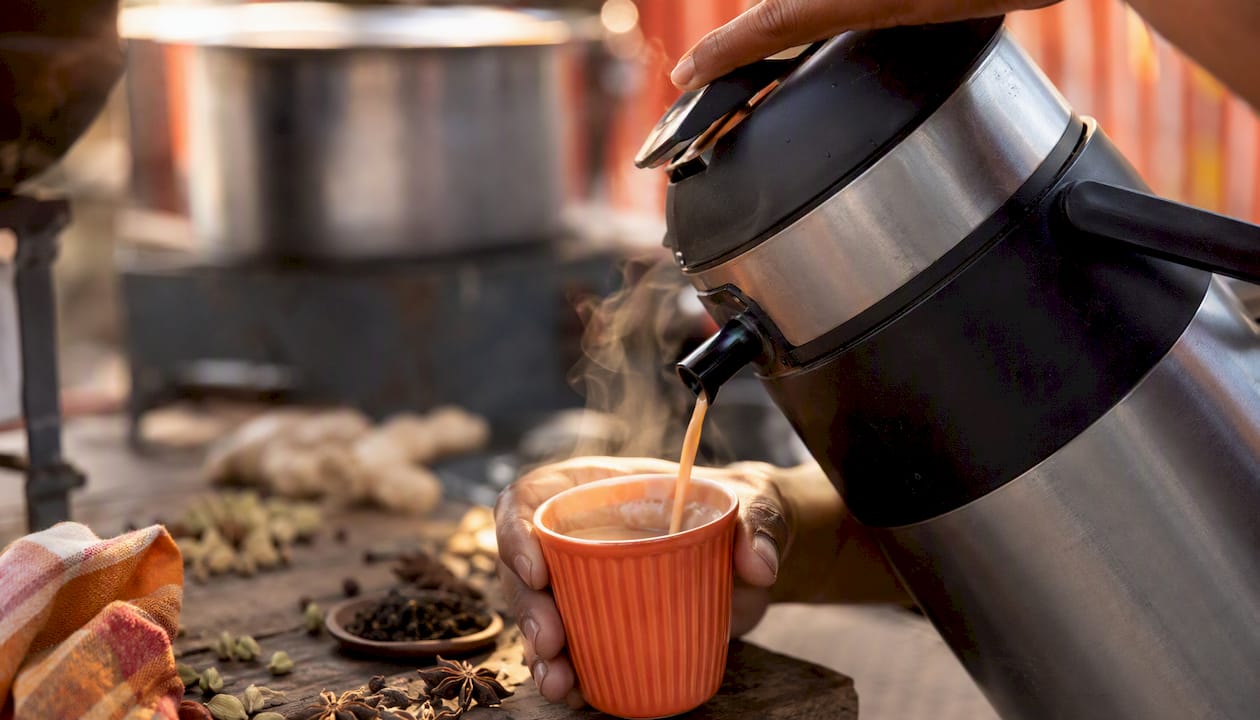
- Events, kiosks, or catering: A double-wall insulated chai pot with a tap, like the Mahaa stainless steel chai pot, is built for exactly this. Brew a batch, fill it hot, and guests pour themselves.
| Method | Capacity | Best use case | Portability |
|---|---|---|---|
| Vacuum flask / thermos | Single serve | On-the-go, commute, travel | High |
| Mug warmer + fitted lid | Single cup | Desk, home office | Low (plug-in) |
| Insulated airpot / thermal carafe | 1–2 L (multi-cup) | Office, small hosting | Medium |
| Mahaa double-wall chai pot with tap | 2–5 L (catering) | Events, kiosks, workplace | Low (stationary) |
| Dropout Chaiwala premix + any vessel | Flexible | Quick refresh, batch top-up | High |
Pro Tip: When you are running a pop-up or office chai station, pair a Dropout Chaiwala chai premix with an insulated airpot. Brew a fresh batch in under five minutes, pour it straight in, and you have consistent flavor on tap for the next two hours without babysitting a stove.
How do these options compare side by side?
The table below covers the dimensions that actually matter for masala chai, not just generic tea.
| Option | Hot-holding duration | Capacity | Best use case | Liner material | Ease of cleaning | Temp control |
|---|---|---|---|---|---|---|
| Vacuum flask / thermos | 6–12 hrs | Single serve | On-the-go | 304 stainless steel | Moderate (narrow mouth) | None (passive) |
| Mahaa double-wall chai pot | 2–4 hrs (batch) | Multi-cup (2–5 L) | Catering / events | Stainless steel | Easy (wide opening + tap) | None (passive) |
| InstaCuppa mug warmer | Indefinite (plug-in) | Single cup | Desk / countertop | N/A (external heat) | Easy | Adjustable (~80°C max) |
| USB thermostatic coaster | Indefinite (USB) | Single cup | Budget desk use | N/A (external heat) | Easy | 3 steps: 55°/65°/75° |
| Insulated airpot / thermal carafe | 3–5 hrs | 1–2 L | Office, small hosting | Stainless or glass | Moderate | None (passive) |
| Dropout Chaiwala MASALA CHAI premix | Brew fresh in minutes | Flexible | Fast refresh, batch | Depends on vessel | Easy | Depends on vessel |
A few flavor notes worth knowing. Stainless steel liners are taste-neutral when clean, but residue from previous brews can add a metallic edge. Glass-lined carafes are gentler on flavor but fragile. For long holds above 4 hours, 304-grade stainless steel vacuum insulation is the most reliable combination of heat retention and taste neutrality.
Mug warmers, including the InstaCuppa and USB thermostatic coasters, maintain temperature rather than rapidly reheat cold liquid. Start with chai that is already hot. The USB thermostatic coaster’s three stepped settings (55°, 65°, 75°C) make it easy to dial in the right maintenance temperature for masala chai without guesswork.
Pro Tip: For a desk setup, a flat-bottom ceramic mug on a warmer beats a double-walled insulated cup. The double wall blocks the heat transfer from the warmer plate, so the chai barely warms at all.
How to use a vacuum flask to keep masala chai hot and tasting fresh
Follow these steps in order. Skipping step one is the most common mistake.
- Pre-heat the flask. Fill it with boiling water, close the lid, and wait two minutes. This prevents the cold steel walls from absorbing heat from your chai the moment you pour. Pre-heating is the single most impactful step for extending holding time.
- Brew your chai hot. Aim for a brewing temperature above 90°C. Spices like cardamom and ginger release their aromatics best at a rolling simmer. Understand the spice profile of masala chai before you brew if you want to get the balance right.
- Discard the pre-heat water, then fill immediately. Pour the chai in right after dumping the hot water. Every second of delay costs temperature.
- Fill to the brim. Air space inside the flask acts as a heat sink. A full flask holds heat noticeably longer than a half-full one.
- Close the lid quickly and firmly. Steam escaping from an open flask is heat you will not get back.
- Limit openings. Each time you open the flask, you lose 2–5°C. Pour what you need, then close immediately.
For long holds (over 4 hours), brew a concentrated chai with less milk and carry hot milk separately. Mix at the point of serving. This protects the spice aromatics and reduces the bacterial risk that comes with holding milk at moderate temperatures for extended periods.
How to clean flasks and airpots to avoid metallic or bitter flavors
Metallic taste is almost always a cleaning problem, not a material defect.
- Rinse immediately after use. Milk residue left in a flask for hours bonds to the steel and is the primary cause of off-flavors in the next brew.
- Weekly deep clean with baking soda. Add one teaspoon of baking soda to warm water, fill the flask, and let it sit for 30 minutes. Rinse thoroughly. This lifts tannin staining from tea and neutralizes milk odors.
- For stubborn residue, use white vinegar. Fill halfway with a 1:1 vinegar-water solution, shake, and leave for 15 minutes. Rinse several times with clean water.
- Never use bleach or harsh abrasives. These damage the interior coating and can leave chemical residues that affect taste.
- Dry completely before storing. A damp flask stored with the lid on develops musty odors quickly.
Key material notes:
- 304 stainless steel is the standard for taste-neutral, durable flasks. It does not react with tea acids or spices under normal use.
- Glass-lined carafes are the most flavor-neutral option but require careful handling. They are better suited for stationary use than travel.
- Avoid flasks with plastic inner liners for chai. Spice oils and milk fats can absorb into plastic and create persistent off-flavors.
Pro Tip: A bottle brush with a long handle is non-negotiable for narrow-mouth flasks. You cannot clean what you cannot reach, and a half-clean flask is the fastest route to bitter chai.
Is milk-based chai safe to hold for hours?
Yes, with clear limits. Milk-based chai held above 60°C is generally safe for up to 4 hours. Below 60°C, bacterial growth accelerates, and the risk increases with time. The danger zone for milk is between 5°C and 60°C, where bacteria multiply rapidly.
Practical thresholds:
- Above 60°C: Safe to hold and serve. Flavor remains good for 2–4 hours depending on the vessel.
- 55°C–60°C: Drinkable but approaching the edge of the safe zone. Consume within 1–2 hours.
- Below 55°C: Do not hold milk chai here. Either reheat promptly or discard.
A milk thermometer takes the guesswork out of this. Clip it to the side of your airpot or check the cup before serving, especially in warm Australian summers when ambient heat can mask how quickly a vessel cools.
Reheating guidance: Reheat milk chai gently on the stovetop over medium-low heat, stirring constantly. Avoid boiling. A single reheat is fine; repeated reheating degrades both flavor and safety. If you know chai will sit for more than 4 hours, brew it black (no milk), store it hot in a flask, and add fresh hot milk at service time. This is the approach many chai professionals use for cold brew concentrate methods and long-hold catering scenarios.
How to supply hot chai for meetings or small workplace events
Serving chai to a group without losing temperature or flavor takes a little planning, but the workflow is straightforward.
Capacity guide: A standard 2-litre airpot serves roughly 8 cups (250 ml each). A 5-litre chai pot covers a small office morning tea of 20 people. Match your vessel to the expected headcount before you brew.
Checklist for a smooth service:
- Pre-heat the airpot or chai pot with boiling water for at least 3 minutes before filling.
- Brew chai at full strength, slightly concentrated if you expect a long hold.
- Fill the vessel immediately after brewing, as hot as possible.
- Use insulated cups with lids for guests. Open cups lose heat fast.
- Stagger service in batches rather than filling all cups at once.
Step-by-step for a 20-person office event:
- Brew a concentrated batch (strong spice, less milk) 30 minutes before service.
- Pre-heat the Mahaa double-wall chai pot with boiling water.
- Pour the concentrate in, top up with hot water or hot milk to the desired ratio.
- Place the pot on a stable surface with the tap accessible.
- Set out insulated cups. Let guests pour themselves.
- Check the temperature at the 2-hour mark. If it has dropped below 60°C, do not continue serving milk chai.
Pro Tip: For events running longer than 2 hours, keep a separate flask of concentrated brew and a small electric kettle nearby. A fresh top-up takes 90 seconds and brings the whole pot back to temperature without re-brewing from scratch.
Quick desk tricks to keep a single cup of chai warm
The simplest fix is also the cheapest: a silicone fitted lid on your mug. A snug lid cuts top-side heat loss dramatically, and it costs almost nothing compared to a mug warmer.
Beyond the lid, here is what actually works at a desk:
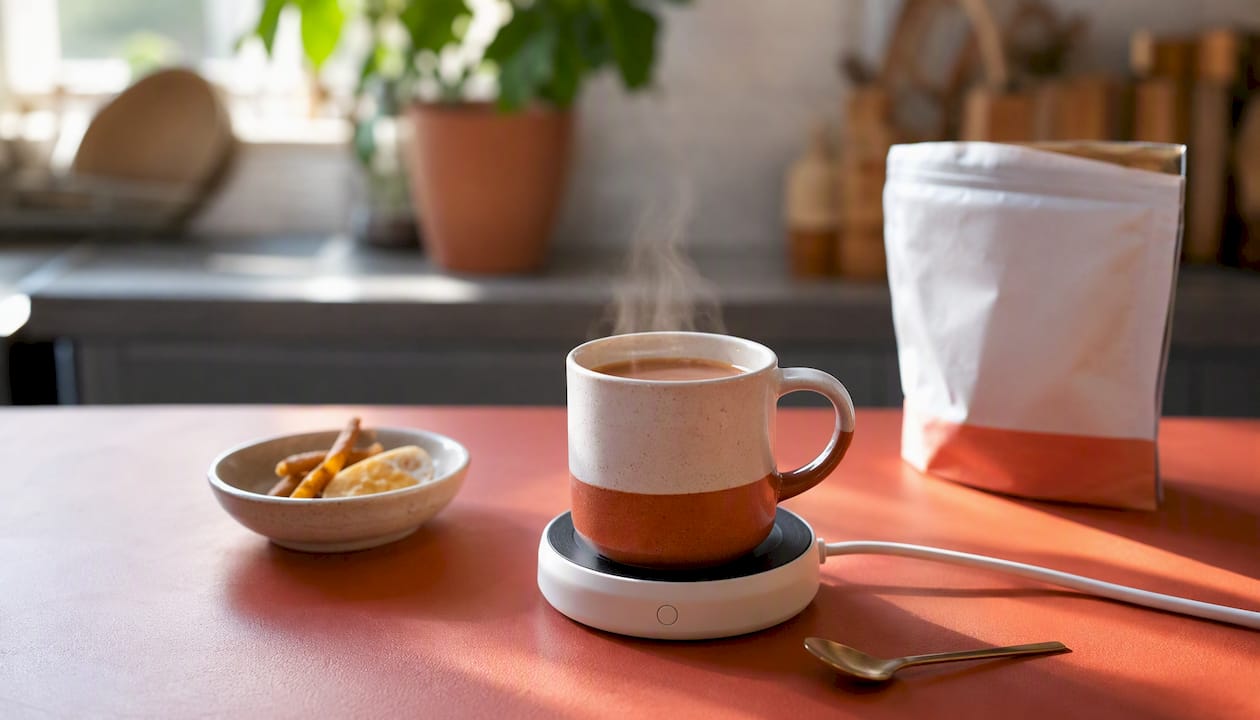
- Mug warmer (electric): Place a flat-bottom ceramic mug centered on the plate. The InstaCuppa warmer’s adjustable settings let you dial up to around 80°C, which is appropriate for masala chai. Start with hot chai; the warmer holds the temperature, it does not rescue cold chai.
- USB thermostatic coaster: Practical for a laptop setup where a power outlet is not nearby. The three heat steps (55°, 65°, 75°C) give you enough control for maintenance. Expect it to keep chai warm, not hot.
- Insulating sleeve: A neoprene sleeve on a ceramic mug adds passive insulation and slows cooling by several degrees over 30 minutes. Cheap, portable, no power needed.
- Double-walled insulated cup: Excellent passive insulation, but do not place it on a mug warmer. The double wall blocks conduction from the plate and the warmer does nothing.
Pro Tip: The best desk setup costs under $20: a flat-bottom ceramic mug like a checkered heart mug or any wide, flat-base ceramic, a silicone lid, and a USB coaster. That combination outperforms a warmer alone by keeping the top sealed.
Why 55–65°C is the sweet spot for masala chai flavor
Holding masala chai at 55–65°C preserves the volatile aromatics in cardamom, ginger, and cinnamon better than either letting it cool or keeping it at a rolling boil. Above 75°C held for extended periods, spice notes flatten and milk develops a “cooked” quality that no amount of fresh spice can mask. Below 55°C, the same aromatics dissipate into the air rather than staying in the cup.
A quality vacuum flask keeps chai drinkably hot above 60°C for roughly 6–8 hours. Pre-heating the flask with boiling water before filling can extend that window toward 10–12 hours by preventing the steel walls from absorbing heat from the chai on contact.
The holding curve matters practically. A well-insulated flask typically starts at around 90°C, drops to roughly 75°C after two hours, and sits near 60°C at the six-hour mark. That trajectory means your chai is in the flavor-preservation zone for most of the hold, provided you pre-heated and filled to the brim.
Practical checks you can run without a lab:
- Use a milk thermometer to verify the holding temperature at the 2-hour mark.
- Taste a small sip. If spice notes are muted and the milk tastes flat, the chai has likely dropped below 55°C.
- Check for skin formation on the surface. A visible milk skin means the chai has been sitting at a moderate temperature long enough to warrant a temperature check before serving.
What we have learned keeping chai hot across Australian cafes and kiosks
Running chai service at locations like Southern Cross and Flinders Street Station teaches you things quickly. The pre-heat step is not optional. A cold flask absorbs heat from the chai faster than most people expect, and the difference between a pre-heated and a cold flask is often 1–2 hours of usable holding time.
The other rule: fill it full. A half-filled flask is a half-effective flask. The air gap at the top is a heat sink, and it costs you temperature every minute.
For batch service, the concentrate-plus-milk workflow is the most practical approach. Brew strong, hold the concentrate hot, add fresh hot milk at the point of serving. It keeps spice aromatics vivid and removes the bacterial risk of holding milk for hours. Paired with a Dropout Chaiwala masala chai premix, the whole process takes under five minutes per batch, which matters when a queue is forming.
Fresh chai in minutes: the premix approach for fast top-ups
When the queue is moving and you need consistent chai without re-brewing from scratch, a quality premix changes the math entirely. The Dropout Chaiwala MASALA CHAI premix pouch is built for exactly this: consistent spice ratios, fast prep, and the kind of flavor that does not vary batch to batch.

For offices and pop-ups, the workflow is simple. Brew a batch using the premix, pour it straight into a pre-heated airpot or thermos, and you have consistent chai on tap for the next two hours. When the pot runs low, a fresh batch takes minutes, not a full re-spice session. The full premix collection covers masala, ginger, cardamom, and classic flavors, so you can rotate or match the crowd. Browse the range at Dropoutchaiwala and pick up in-store at Southern Cross or Flinders Street Station, or order online for delivery.
Sources
These are the key references used in this article, along with what you will find on each page:
- Thermos Flask for Tea: Keep Chai Hot for 12 Hours – InstaCuppa Store
- Best thermos roundup – Popular Mechanics
